


15,000-Year-Old Hearth Remains Discovered at Molí del Salt, One of Catalonia’s Major Late Hunter-Gatherer Settlements
The 2026 archaeological excavation season has identified numerous combustion structures and evidence of prepared surfaces, providing new insights into the organization of domestic space during the Upper Paleolithic
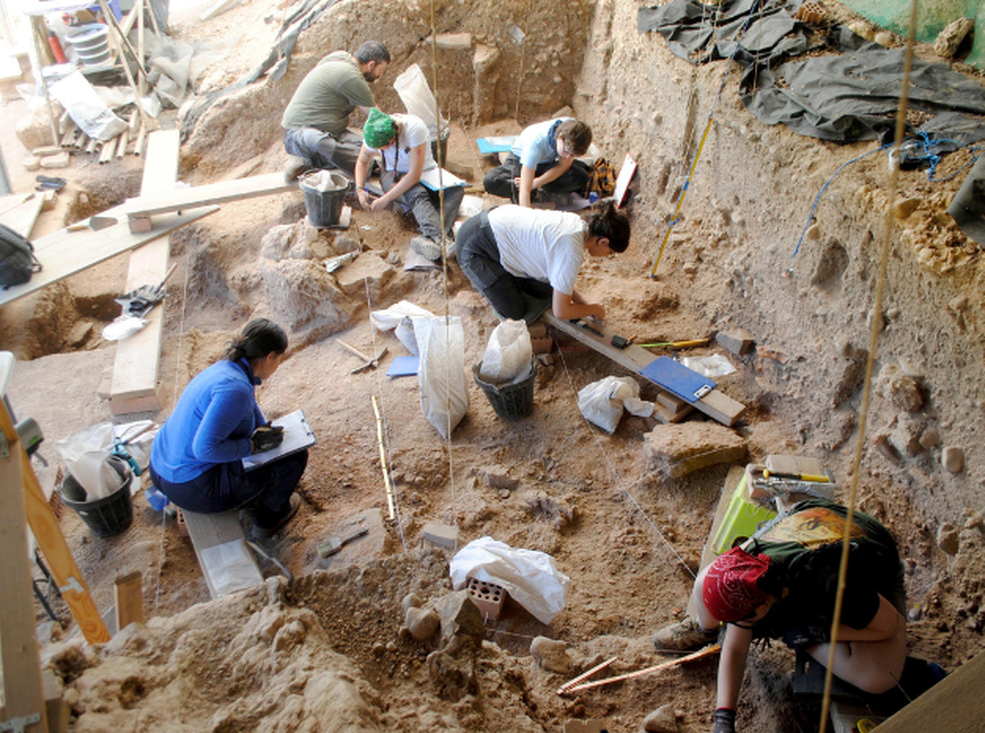
The twenty-seventh archaeological excavation season at the Molí del Salt site (Vimbodí i Poblet, Conca de Barberà) has documented numerous hearth remains associated with human occupations dating to approximately 15,000 years ago. This discovery represents one of the most significant outcomes of this year’s fieldwork and provides new information about the daily lives of the hunter-gatherer groups who inhabited the Francolí basin during the final stages of the Upper Paleolithic.
The excavation, carried out between 11 May and 5 June, focused on archaeological level B2, a stratigraphic layer first investigated in 2019 that has already yielded some of the site’s most remarkable discoveries, including two engraved stone plaques depicting animals and human remains attributed to a child.
More than two thousand archaeological remains were recovered during the 2026 season, including numerous flint artefacts and animal bone remains. Together, these findings provide valuable information about the economic activities, technology, and social organization of the human communities that occupied this location around 15,000 years ago.
Fire at the Centre of Social and Domestic Life
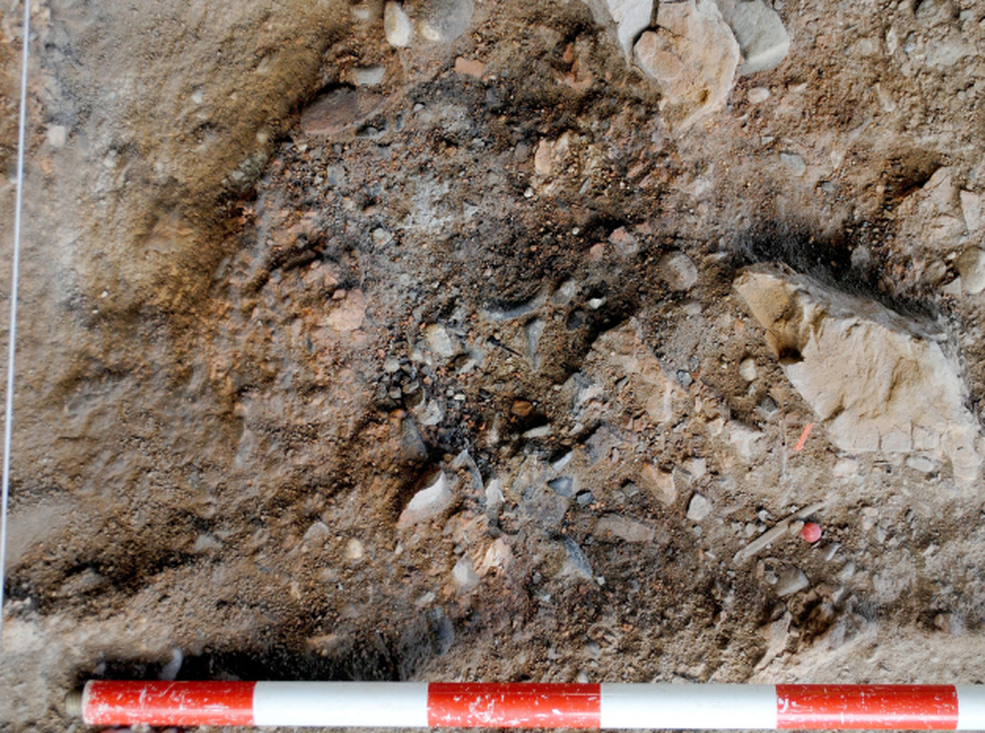
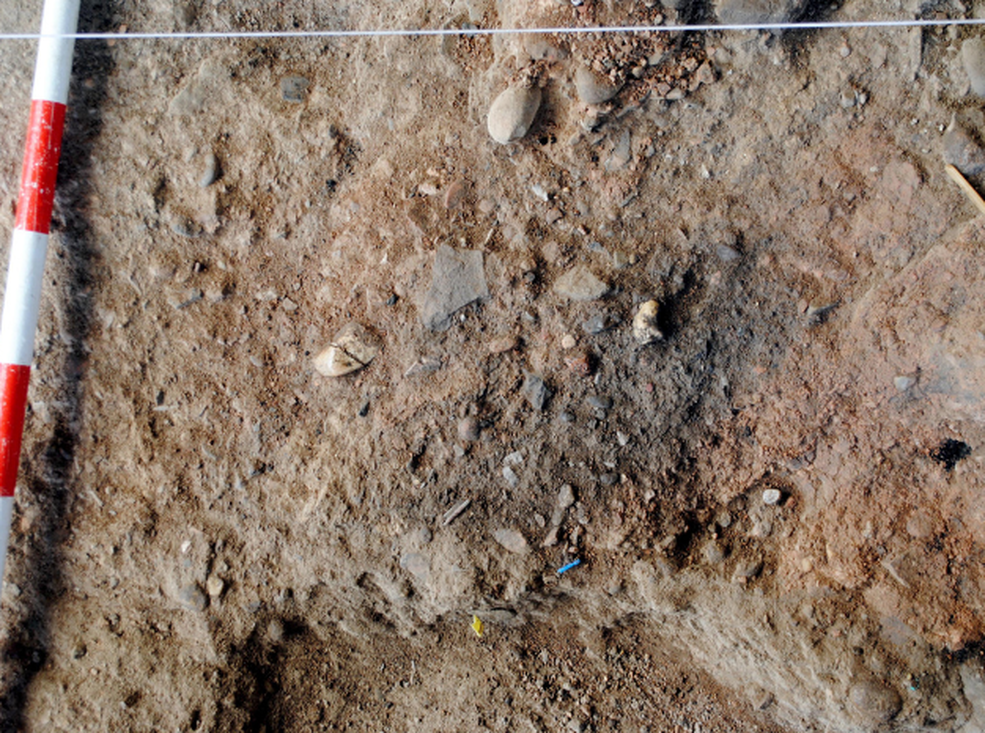
Beyond the abundance of recovered materials, the main achievement of this season has been the identification of several combustion structures associated with the human occupations of level B2. These findings complement the stone structures documented during previous excavation seasons and allow researchers to reconstruct the organization of living spaces in greater detail.
Hearths were a fundamental element of hunter-gatherer societies. A wide range of everyday domestic activities took place around the fire, from food preparation to the manufacture and maintenance of tools. At the same time, these spaces served as centres of social interaction, fostering the exchanges that contributed to the transmission of knowledge, traditions, and social practices within the group.
Preliminary analyses indicate that some of the identified hearths display complex structures and that, in certain cases, they were built on prepared surfaces made of clay layers. This suggests that these communities understood the properties of clay and deliberately used it in the construction of fire-related features.
Archaeological evidence also shows that some of these hearths were reused or reactivated on multiple occasions, further highlighting their importance within the spatial organization of the occupied area.
A Key Site for Understanding the Last Paleolithic Hunter-Gatherers
Molí del Salt is one of the key archaeological sites for the study of the last hunter-gatherer groups of northeastern Iberia. Research carried out there for nearly three decades has provided fundamental insights into the lifeways, symbolic practices, and adaptive strategies of the human populations that lived during the final stages of the last Ice Age.
Funding
The 2026 excavation season involved 23 participants, mainly students and researchers from the Universitat Rovira i Virgili and IPHES-CERCA. Researchers from the UNED, the University of La Laguna, and the University of Valencia also took part in the project.
The excavations form part of the research project Palaeoenvironmental Evolution and Prehistoric Settlement in the Tarragona Region, funded by the Government of Catalonia. The work also receives financial support from the Conca de Barberà County Council, the Vimbodí i Poblet Town Council and the Tarragona Provincial Council.