

Presentadas 20 tesis del Máster Erasmus Mundus en Arqueología del Cuaternario y Evolución Humana
Los trabajos abordan una gran diversidad de temáticas y contextos geográficos, desde la evolución humana y la tecnología prehistórica hasta la arqueobotánica, la zooarqueología, el arte rupestre o la divulgación del patrimonio
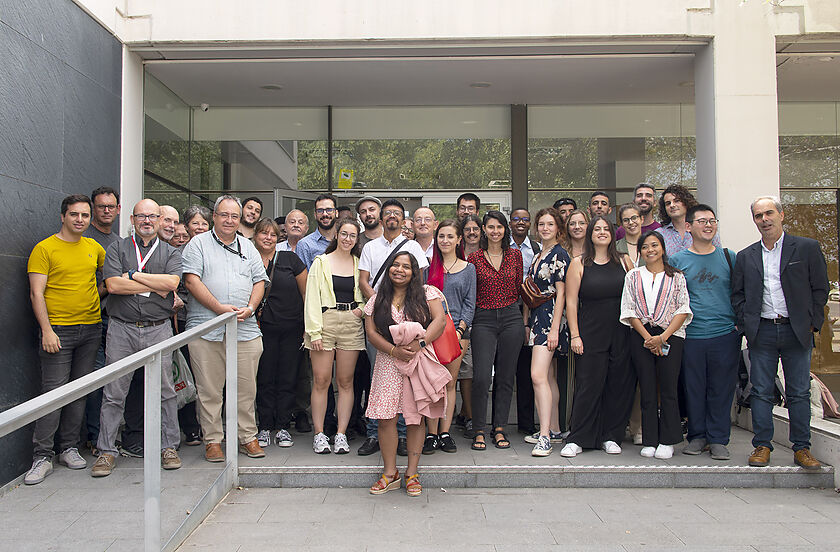
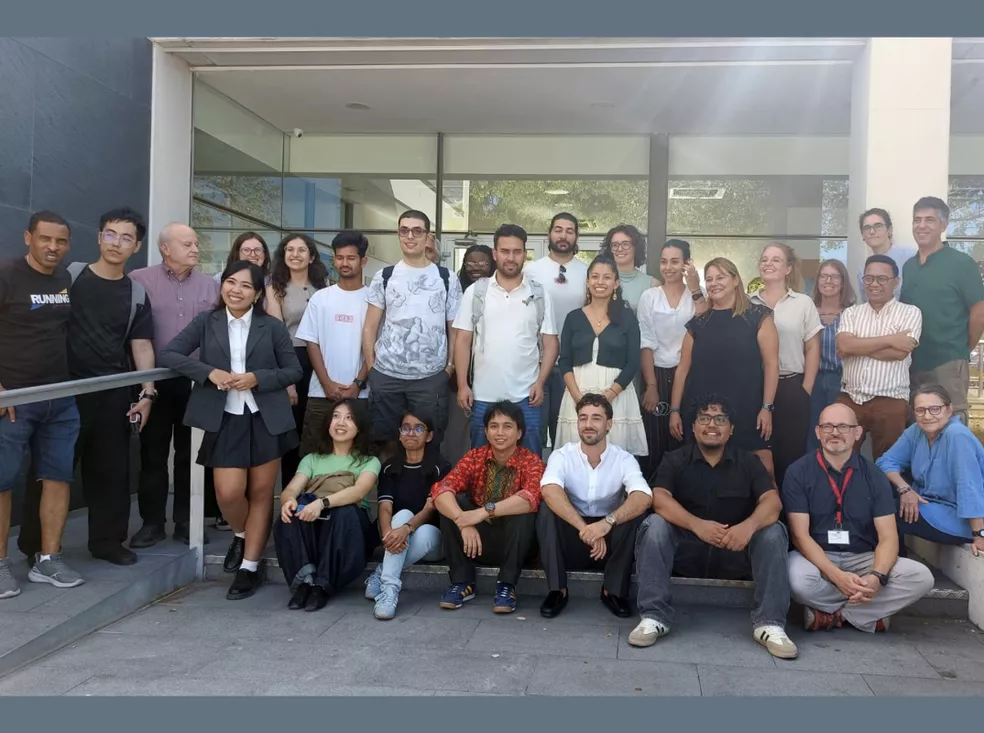
Un total de 20 estudiantes han presentado sus trabajos finales de investigación del Máster Erasmus Mundus en Arqueología del Cuaternario y Evolución Humana (IMQP) los días 14 y 15 de septiembre de 2026 en la sede del IPHES-CERCA, ubicada en el campus Sescelades de la Universitat Rovira i Virgili (URV). Las defensas se han llevado a cabo en la Sala Romaní, con posibilidad de seguimiento en línea, y ponen nuevamente de manifiesto el marcado carácter internacional e interdisciplinar del programa.
De este conjunto de trabajos, 6 han sido dirigidos por investigadores/as del IPHES-CERCA, que han tutorizado investigaciones en campos tan diversos como la zooarqueología, la tafonomía, la arqueobotánica, la traceología, la antropología física o la museografía.
El tribunal del máster de este año ha estado formado por la Dra. Marta Arzarello y la Dra. Julie Arnaud (Università di Ferrara), el Dr. Christophe Falguères (Muséum National d’Histoire Naturelle, París), la Dra. Sara Garcês (Instituto Politécnico de Tomar), el Dr. Robert Sala y el Dr. Carlos Lorenzo (Universitat Rovira i Virgili).
Internacionalización y trayectoria del máster
El Máster Erasmus Mundus en Arqueología del Cuaternario y Evolución Humana se lleva a cabo en colaboración entre la Universitat Rovira i Virgili, la Università degli Studi di Ferrara (Italia), el Muséum National d’Histoire Naturelle (París, Francia) y el Instituto Politécnico de Tomar (Portugal).
Este máster, que se inició en la URV el curso 2004-2005, fue pionero en su ámbito y continúa siendo un programa de atracción internacional de primer orden. La oferta formativa se ha consolidado gracias a la investigación de excelencia que se lleva a cabo en el IPHES-CERCA en proyectos de todo el mundo, y a su combinación de enseñanza, investigación, trabajo de campo y transferencia a la sociedad. El sello Erasmus+ constituye un reconocimiento de calidad que consolida el impacto internacional del IPHES-CERCA y de la URV.
Relación de estudiantes y tesis defendidas
- Putra Hudlinas Muhammad
Combining geomatics and geoarchaeology: long-term topographic evolution of the Semedo area in relation to the distribution and taphonomy of palaeontological assemblages.
Dir.: Thomas Ingicco, Tara Beuzen-Waller, Igor Girault.
- Ndapewa Julia Shilume
A diachronic analysis of the Basalt lithics for the later stone age site: Seal Rock Shelter (Erongo, Namibia).
Dir.: Isis Mesfin, David Pleurdeau.
- Ferran Castellón Castellví
The last Magdalenian hunter-gatherers of NE Iberia through lithic technology: the case of Cova Gran de Santa Linya archaeological site.
Dir.: Manuel Vaquero Rodríguez, Javier Sánchez Martínez.
- Luz Stephanie Rivera Villamarín
The Signature of a Knapper: Tracking Technical Individualities through the Integrated Analysis of Experimental Acheulean Lithic Assemblages.
Dir.: Amelia Bargalló Ferrerons, Paola García-Medrano.
- Chandan Kumar Rajak
Early Middle Paleolithic Retouched and Unretouched Lithic Tools from Coupe-Gorge (Montmaurin, France): An Approach Combining Techno-Functional and Use-Wear Analysis.
Dir.: Cyrielle Mathias, Andreu Ollé.
- Mauricio Gastello
Schematic Rock Art of the Abrigo del Águila, Cabeza del Buey, Badajoz, Extremadura, Spain.
Dir.: Sara Garcês, Hipólito Collado Giraldo.
- Jaime Mir Lapido
A Hunt for Time: Dissecting El Salt’s Unit Xb Through Faunal Analysis and GIS Tools.
Dir.: Isabel Cáceres, Leopoldo J. Pérez.
- Altayeb Abdalla Hassbrabo Mohammed
Hunter-gatherers living in the changing landscapes of the Sudan during the Holocene: Contribution from lithic use-wear analysis.
Dir.: Alice Leplongeon, Antony Borel.
- Yuxin Ning
An Analysis of Ethnographic Bone Tools of the Mandan Culture (North Dakota, US) through the Lens of the Technological Approach in Prehistory.
Dir.: Éva David, François Gendron.
- Alein Mischa de Guzman
Update available: installing gamification and digital routes for prehistoric storytelling applied in the Museu de Arte Pré-histórica e do Sagrado no Vale do Tejo in Mação, Portugal.
Dir.: Hugo Gomes, Sara Garcês.
- Aurora Patiño-Ochoa
La calcita como desgrasante cerámico en el Neolítico Antiguo de la Cueva de El Mirador (Sierra de Atapuerca, Burgos, España): una aproximación experimental a las decisiones tecnológicas en la producción cerámica.
Dir.: Ethel Ann Allué Martí, Roser Marsal, Josep Maria Vergès Bosch.
- Yemane Meresa
Wood Use in Rural and Urban Settlements during the Pre-Aksumite (800–50 BCE) and Aksumite (50 BCE–700 CE) Periods at Mezber and Ona Adi (Ethiopia): A Comparative Approach through Anthracological Analysis
Dir.: Ethel Allué, Abel Giralt.
- Tamanna Jahan
Agriculture and Environments in the Bronze Age Indus Valley: Archaeobotanical Study of Chanhu-daro, Sindh, Pakistan.
Dir.: Margareta Tengberg.
- Maria Sahli
Reconstructing Quaternary Archaeological Fieldwork in the Saoura Valley through the Field Notebooks of Jean Chavaillon.
Dir.: Roland Nespoulet, Robert Sala.
- Jiageng Chang
A Geometric Morphometric Analysis of the Pozzilli Cranium (Molise, Italy) Dated to the 6th–5th Century BC.
Dir.: Julie Arnaud.
- Abril Castagnola
Morphological variation of the coxal bone in extant and fossil hominids: Implications for the reconstruction of Ardipithecus ramidus.
Dir.: Carlos Lorenzo, Julie Arnaud.
- Marta García Ramos
Estudio de las asimetrías cerebrales en el género Homo a partir del análisis de endocráneos.
Dir.: Carlos Lorenzo.
- Ysé Meltz
Study of human remains from Pinterville in the Eure (Late Neolithic).
Dir.: Aline Thomas, Julie Arnaud.
- Arturo Giacobbe
Dietary inferences from buccal dental microwear of an Iberian Chalcolithic population: the case of El Golfín (Badajoz, Spain).
Dir.: Marina Lozano, Raquel Hernando.
- Ghulam Hussain
The Pre- Proto and Historic site of Jardim das Portas do Sol: a contribution for the study of ceramic remains.
Dir.: Hugo Gomes, Luiz Oosterbeek, Laurent Caron.