


IPHES-CERCA launches the first catalan terminology resource dedicated to prehistory and human evolution
Developed in collaboration with TERMCAT and funded by AGAUR, the project will turn Archeoindex into a reference resource for research, education and science communication in catalan
IPHES-CERCA has launched an innovative project to adapt, expand and validate in Catalan Archeoindex, the scientific thesaurus developed by the institute to describe more accurately the data generated through research in archaeology, prehistory and human evolution and deposited in open-access repositories. The initiative is being carried out in collaboration with TERMCAT, Catalonia’s terminology centre, and has been made possible through the CERCA grants for promoting the use of Catalan in research, funded by the Agency for Management of University and Research Grants (AGAUR).
The aim is to make Archeoindex the first comprehensive collection of standardised Catalan terminology specifically devoted to these disciplines, providing the research community with a validated resource aligned with international research data management standards for use in research, teaching and science communication.
An open scientific resource
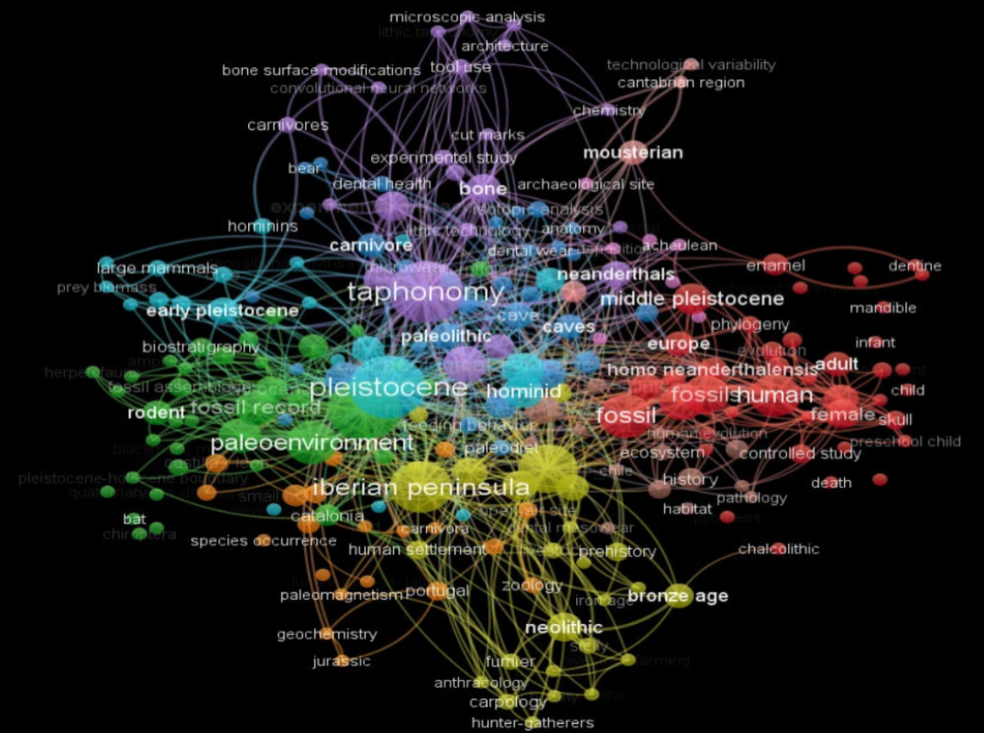
Archeoindex is a controlled vocabulary that currently brings together more than 800 specialised concepts in archaeology, prehistory and human evolution. Originally developed in English, it is used to describe, classify and retrieve scientific data according to the FAIR principles (Findable, Accessible, Interoperable and Reusable), ensuring that research data can be easily discovered, accessed, shared and reused.
With this project, IPHES-CERCA is taking a further step by incorporating a fully validated Catalan version. The new terminology will facilitate the use of Catalan in research, higher education, science communication and knowledge transfer, while strengthening interoperability between scientific infrastructures and research data repositories.
Terminology validated by specialists
The project is being developed in collaboration with TERMCAT, which will review and validate the more than 800 terms included in the thesaurus to ensure both scientific accuracy and terminological consistency.
The work is coordinated by Dr Gerard Campeny, Head of Scientific Communication at IPHES-CERCA, and involves Javier Sopesens, the institute’s Data Management and Curation Officer, who is leading the integration of the Catalan terminology into Archeoindex, as well as Marta Fontanals, Head of Knowledge Transfer and Responsible Research, who is coordinating the collaboration with the institute’s research units to ensure that the new terminology reflects the scientific needs of the centre.
According to Gerard Campeny, “Our goal is not simply to translate a scientific vocabulary, but to provide the research community with an open, validated terminology resource that strengthens Catalan as a language for research, teaching and knowledge transfer. This project will help researchers share data, generate knowledge and communicate science with the highest standards of quality.”
Catalan as a language for Open Science
Once the validation process has been completed, the terminology will be incorporated into both Archeoindex and TERMCAT’s terminology resources, making it easier for researchers, universities, museums, research institutions and heritage professionals to consult and reuse these terms.
The project also includes improvements to the accessibility of the Archeoindex platform, training sessions for researchers and technical staff, and a range of communication activities aimed at promoting the use of this new resource both within IPHES-CERCA and beyond.
Through this initiative, IPHES-CERCA reinforces its commitment to Open Science, research data management and the promotion of Catalan as a language of scientific knowledge.