


Cova de la Font Major challenges the traditional map of European Palaeolithic art
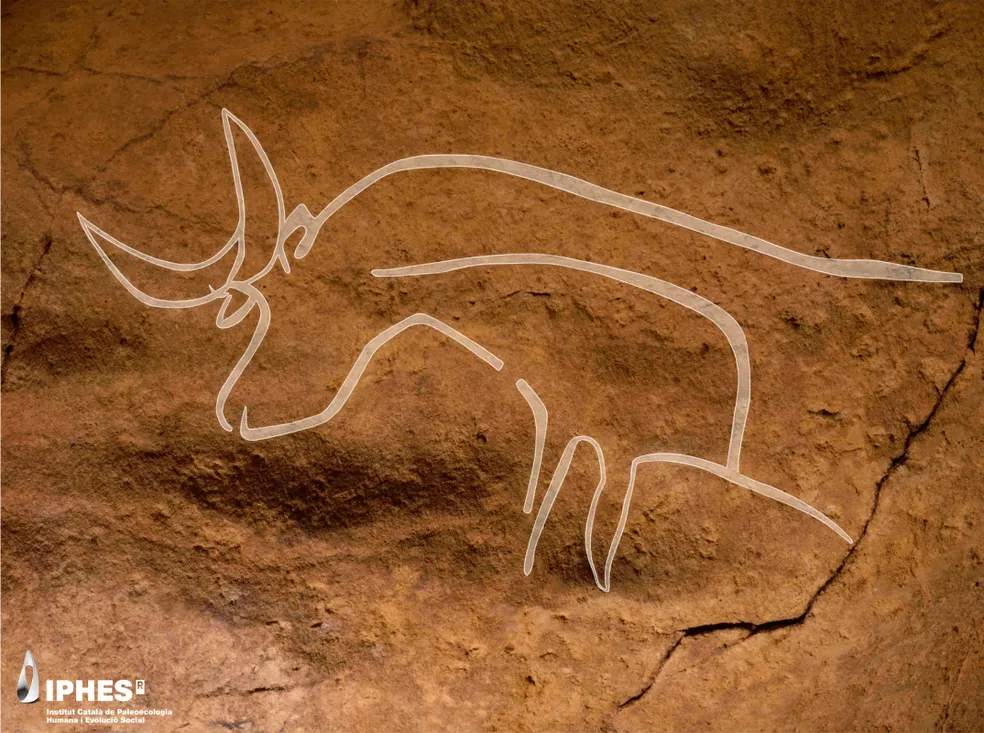
A study by IPHES-CERCA and Rovira i Virgili University, published in the scientific journal Antiquity, places the cave in l’Espluga de Francolí among the major Palaeolithic art sites on the Iberian Mediterranean coast, with 280 engraved motifs, including 55 animal representations
The research challenges the traditional view of the north-east Iberian Peninsula as a marginal area for Palaeolithic artistic expression and provides new evidence of the distinctive features of Mediterranean art compared with the Franco-Cantabrian region
For decades, the map of European Palaeolithic art has been dominated by the great decorated cave complexes of the Franco-Cantabrian region, while areas such as Catalonia appeared to have played a secondary role in the earliest artistic expressions of human populations. Research by the Catalan Institute of Human Paleoecology and Social Evolution (IPHES-CERCA) and Rovira i Virgili University (URV) now challenges this interpretation and calls for a reassessment of the role of the north-east Iberian Peninsula in the history of European Palaeolithic art.
The study, published in the international scientific journal Antiquity and authored by researchers Josep Maria Vergès and Míriam Salas-Altès, presents a scientific analysis of the Palaeolithic engravings identified in 2019 at Cova de la Font Major, in l’Espluga de Francolí (Conca de Barberà). The research documents 280 graphic motifs, including 55 animal representations. This exceptional concentration makes the cave the third most important Palaeolithic cave-art assemblage on the Mediterranean side of the Iberian Peninsula in terms of the number of animal figures, behind only Ardales and La Pileta caves in Andalusia.
The scale of the assemblage is particularly significant given that, before the 2019 discovery, only two cave representations attributed to the Palaeolithic were known in Catalonia, one of which remains of uncertain origin. Font Major transforms this picture and provides new evidence about the geographical distribution of Palaeolithic art and the diversity of graphic traditions that developed in the western Mediterranean.
“Until now, very little Palaeolithic rock art had been identified in the north-east Iberian Peninsula compared with the abundant record in the Franco-Cantabrian region,” explains Josep Maria Vergès, an IPHES-CERCA researcher and co-author of the study. The researchers note that this apparent absence may reflect not only the actual distribution of prehistoric artistic expressions, but also the difficulties involved in identifying and preserving them.
A distinctive Mediterranean artistic tradition
One of the study’s main contributions is to deepen our understanding of the artistic expressions of Palaeolithic populations in the western Mediterranean. Analysis of the forms, depicted subjects and characteristics of the engravings reveals distinctive features that help define a Mediterranean graphic tradition different from the major artistic expressions of the Franco-Cantabrian region.
“Contrary to previous assumptions, the north-east Iberian Peninsula preserves Palaeolithic rock-art sites of the highest importance,” says Míriam Salas-Altès, a researcher at IPHES-CERCA and URV. “Western European Mediterranean art is now enriched by an assemblage that allows us to better characterise a graphic tradition with its own identity, distinct from the Franco-Cantabrian tradition.”
The figures help illustrate how exceptional Font Major is. Along the Iberian Mediterranean coast, approximately 75% of known Palaeolithic cave-art assemblages contain no more than five animal representations, while over 90% contain no more than twenty. With 55 animal figures, the cave at l’Espluga de Francolí stands well above these figures.
Horses, deer and an exceptional bear
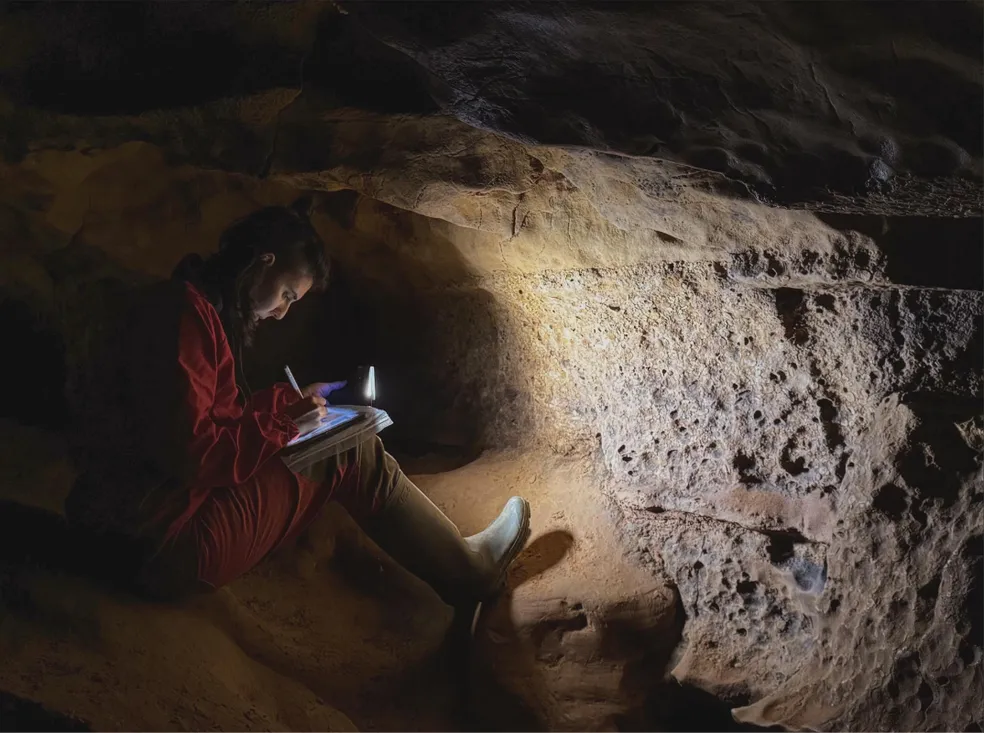
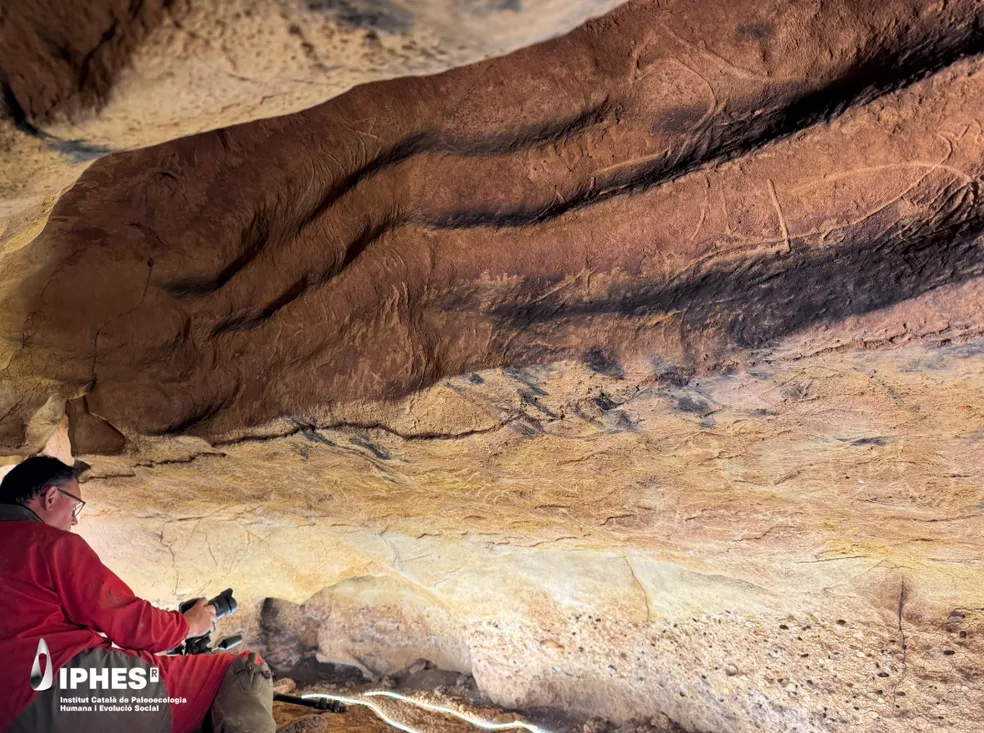
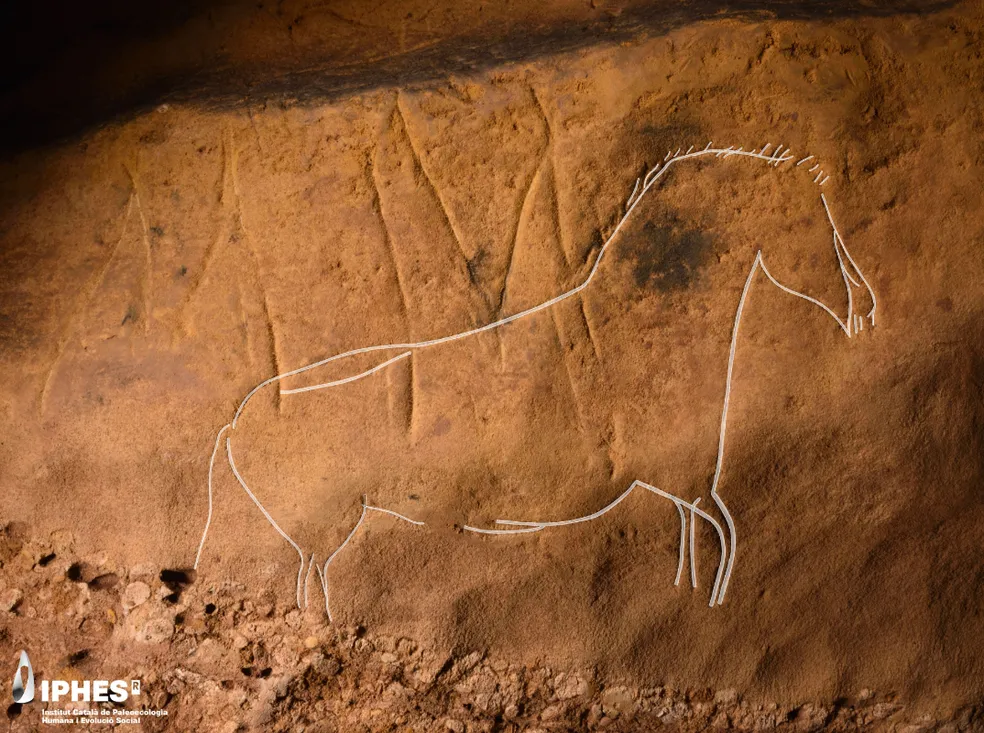
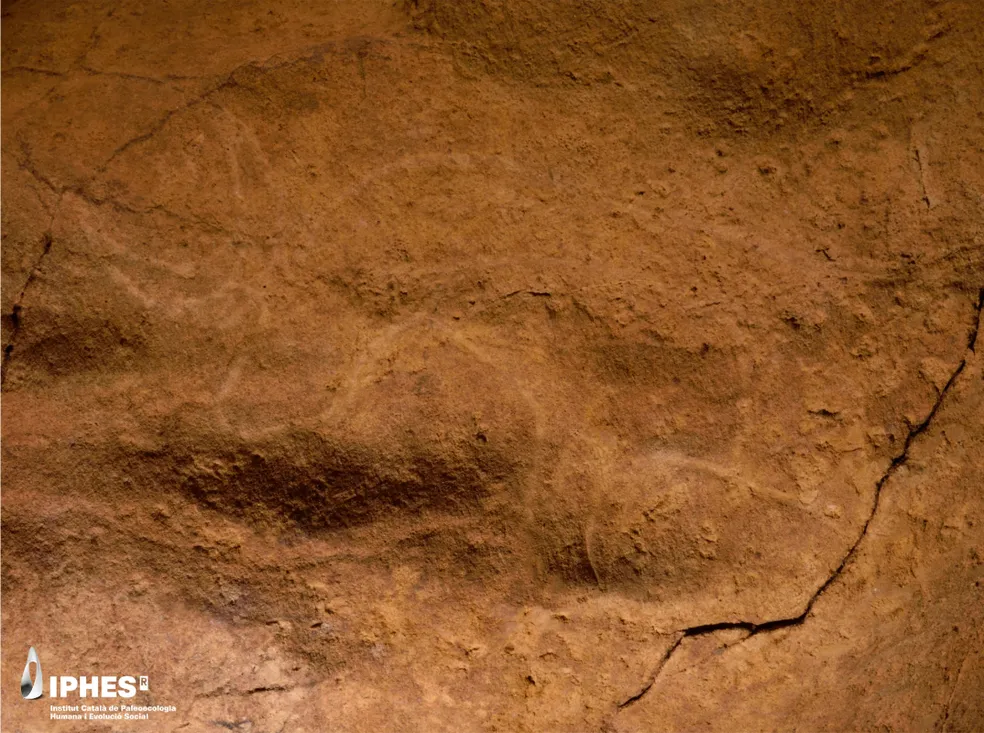
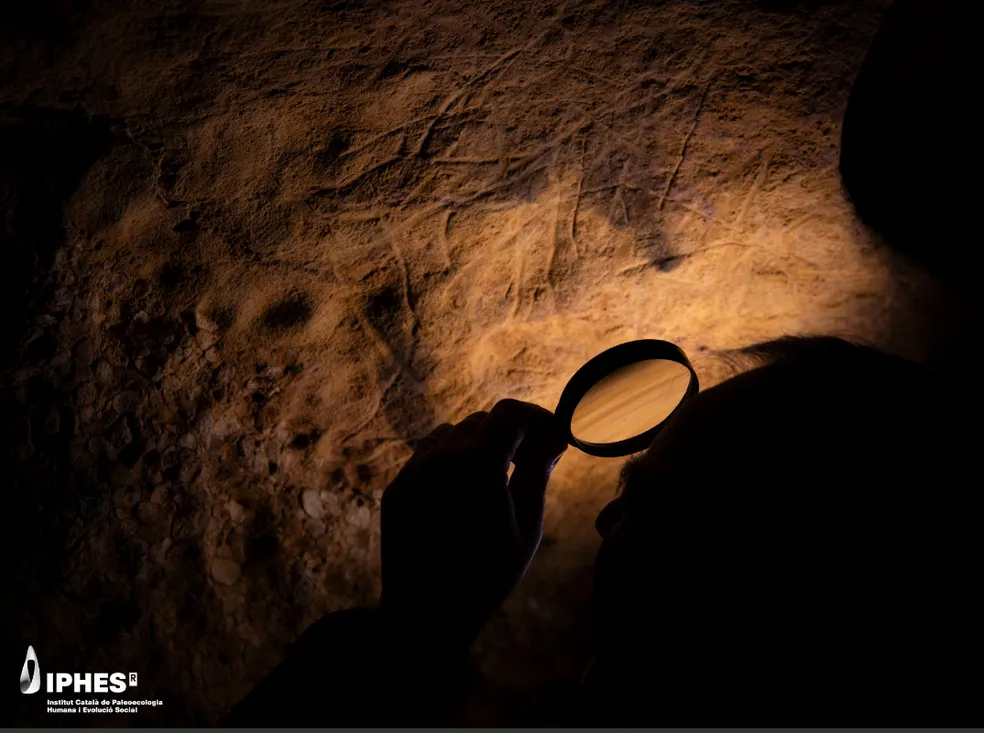
The engravings are concentrated in Gatoneres de Cal Palletes, a network of passages about 250 metres from the cave’s present-day entrance. The images were made mainly by incising the cave walls and ceilings, particularly in softer and therefore more fragile areas. To study them without damaging the surfaces, the research team used digital documentation techniques and high-resolution three-dimensional models, allowing the engravings’ features to be examined in detail.
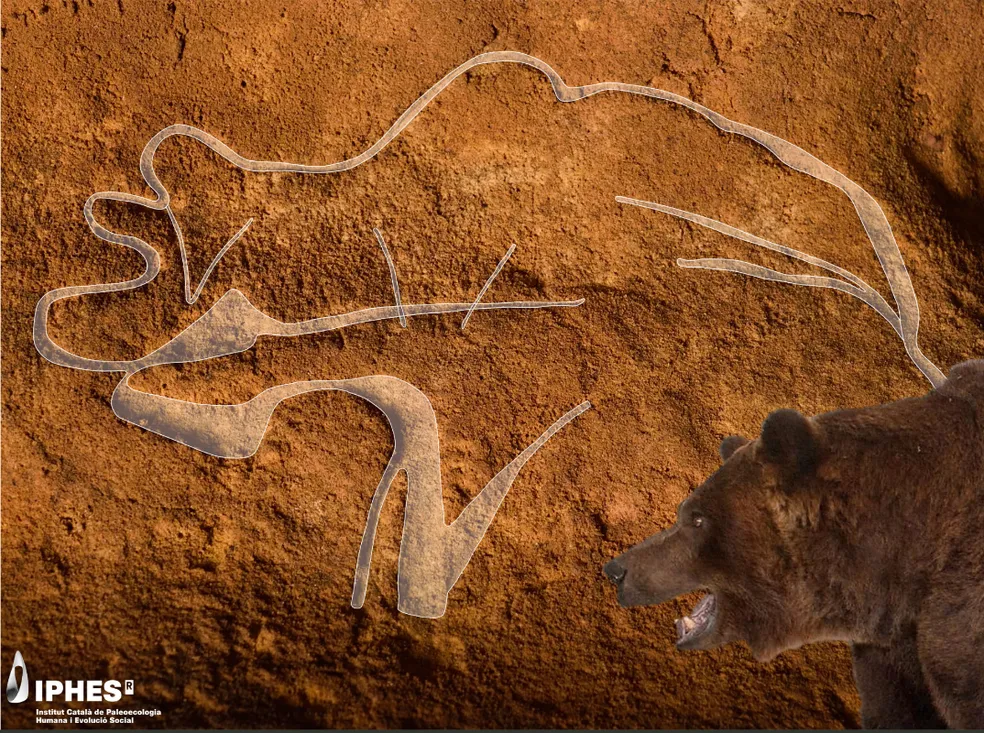
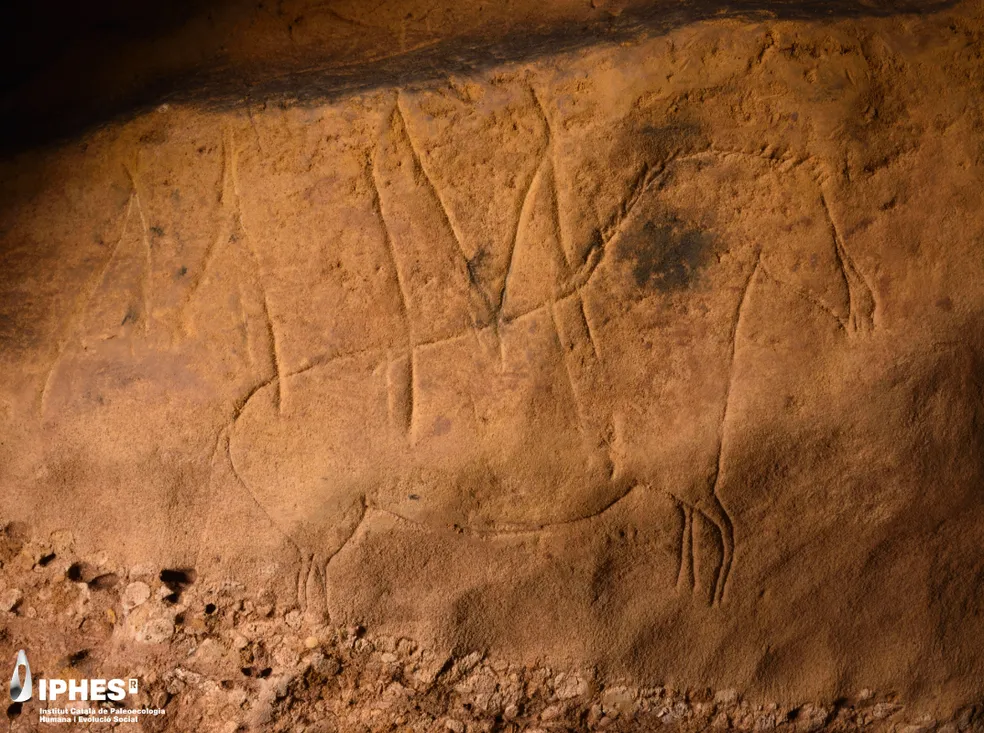
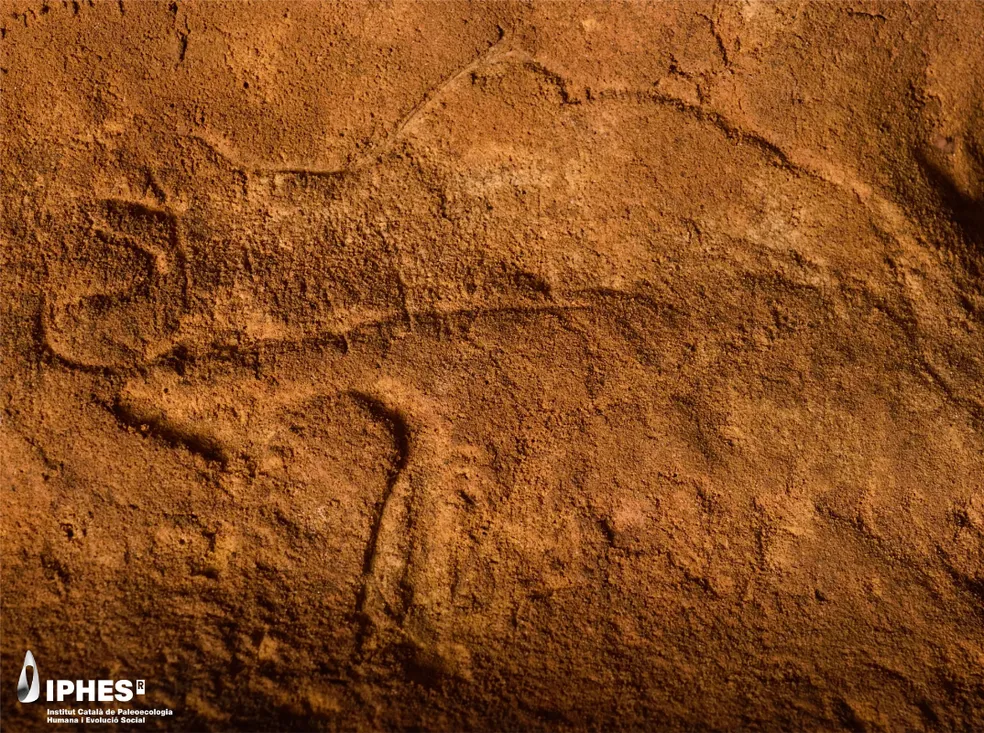
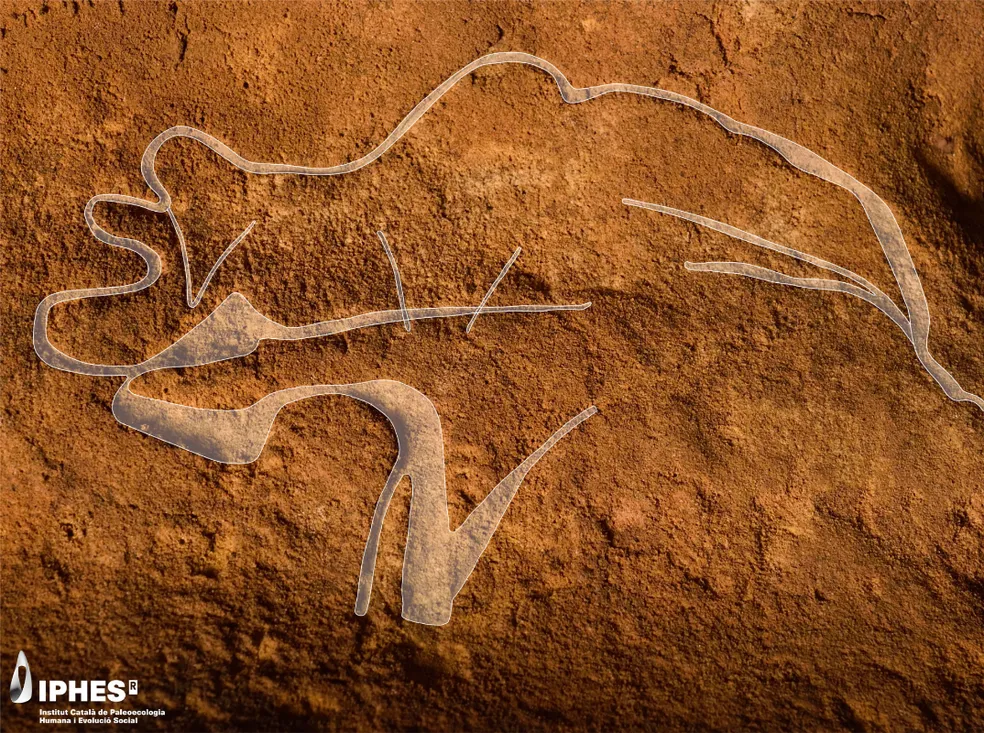
The figures identified include horses, deer, bovids and caprines. Particularly striking is a depiction of a bear, an animal rarely represented in Palaeolithic art, shown with its ears in frontal perspective and its mouth slightly open.
The assemblage also includes numerous non-figurative motifs, such as groups of parallel lines, geometric shapes and other compositions that are difficult to interpret. In some cases, prehistoric artists may have incorporated cracks, relief features and natural irregularities in the cave walls into their depictions.
Chronology is another important aspect of the study. Archaeological evidence documented inside the cave indicates episodes of human presence approximately 41,000 to 26,000 years ago. Although the engravings have not yet been directly dated, their stylistic characteristics and archaeological context suggest that a substantial proportion may belong to phases predating the Magdalenian, a period that began around 19,000 years ago.
This possible early date further highlights the importance of Font Major for studying the symbolic expressions of Upper Palaeolithic human populations in the western Mediterranean.
From the 2019 discovery to a new interpretation of Palaeolithic art
The engravings at Cova de la Font Major were discovered on 30 October 2019 during an IPHES-CERCA archaeological fieldwork campaign. The discovery, which attracted extraordinary media attention, came just days after the Francolí floods, which had severely affected l’Espluga de Francolí and other towns in the area.
The discovery was particularly surprising because the engravings were found in a part of the cave that had been visited for decades and had even formed part of a tourist route. Moreover, the walls, mainly composed of irregular conglomerates, had led researchers to believe that the cave was not a suitable setting for Palaeolithic art.
Since the cave’s main entrance reopened in 1957, thousands of people had walked past these walls without recognising the Palaeolithic origin of the engravings. Some visitors had scratched names, dates and other modern graffiti over the prehistoric images.
Seven years after the discovery, publication of the study in Antiquity makes it possible to move beyond the initial find and better understand the archaeological, artistic and historical significance of this exceptional assemblage.
The findings also raise new questions about the distribution of Palaeolithic art across Europe. If an assemblage of this scale went unnoticed for decades in a heavily visited cave, other artistic expressions may still remain unidentified in caves that are already known.
Font Major is thus becoming a key site for studying the diversity of artistic expressions in the European Palaeolithic. At the same time, the exceptional fragility of the engravings highlights the importance of continuing to investigate and preserve a heritage resource that may yet reveal new information about prehistoric populations in the western Mediterranean.
Bibliographic reference
Vergès Bosch, J. M. & Salas-Altès, M. (2026). Filling gaps: the Palaeolithic rock art of the Cova de la Font Major on the north-east Iberian Peninsula. Antiquity. DOI: 10.15184/aqy.2026.10447
Funding
Research at Cova de la Font Major is funded by the Department of Culture of the Government of Catalonia through project CLT009/22/00024; the Agency for the Management of University and Research Grants (AGAUR) (SGR2021-01239 and 2021 SGR 01237); Rovira i Virgili University (2023PFR-URV-01239); and l’Espluga de Francolí Town Council. IPHES-CERCA has received financial support through the “María de Maeztu” programme for units of excellence (CEX2024-01485-M/funded by MICIU/AEI/10.13039/501100011033). MSA’s research is supported by a predoctoral Formación de Profesorado Universitario (FPU) grant from the Spanish Ministry of Science, Innovation and Universities (FPU21/02177).
