

Cova dels Xaragalls provides new clues to how prehistoric communities managed their dead
The 2026 archaeological campaign has uncovered human remains with preserved anatomical connections, shedding light on the handling and redistribution of bodies within a collective burial site
The discovery of two small polished-stone adzes and the identification of new Pleistocene deposits containing animal remains broaden research prospects into how the cave was used over thousands of years
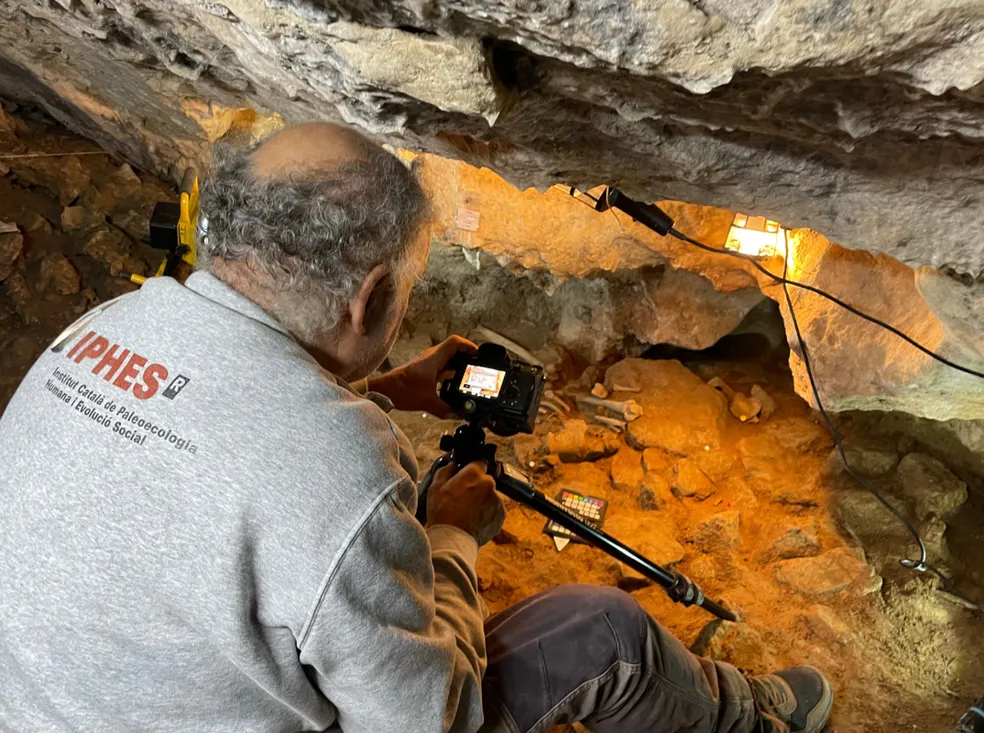
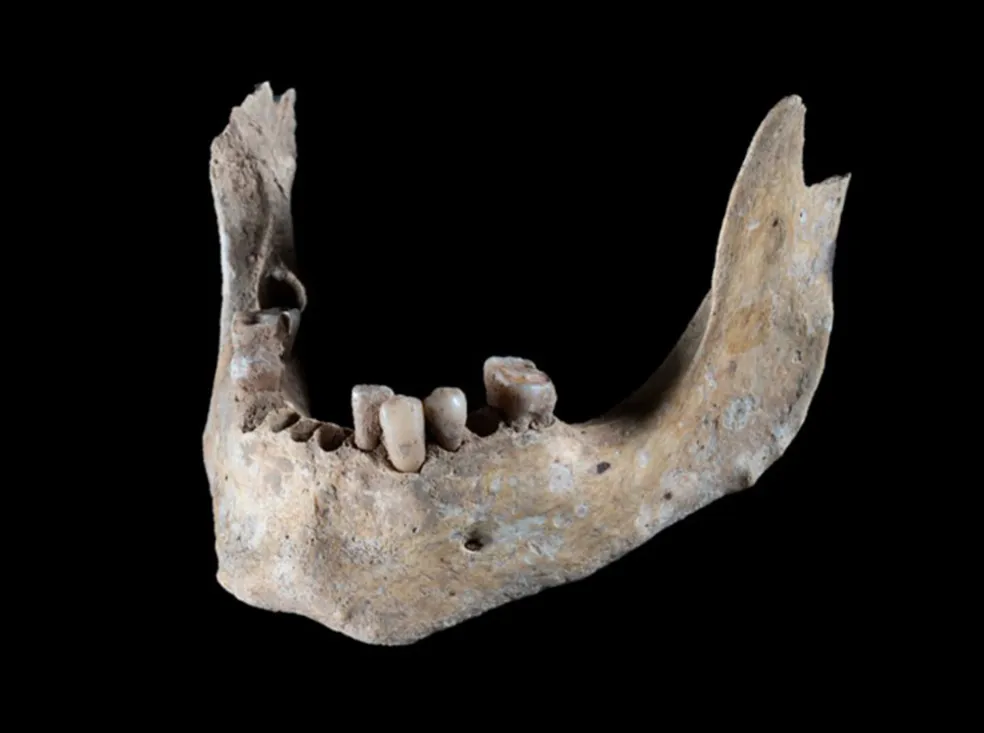
The latest archaeological excavation campaign at Cova dels Xaragalls, in the municipality of Vimbodí i Poblet (Conca de Barberà, Catalonia), has provided new evidence of the funerary practices of the prehistoric communities that used the cave as a collective burial site. Among the most significant discoveries are human remains belonging to adults and children, some of which retain anatomical connections. These finds will help researchers better understand how bodies were managed and the burial space reorganised during successive episodes of interment.
The excavations, conducted between 5 and 26 October 2026, also yielded two small polished-stone adzes that may have formed part of funerary deposits, and identified new Pleistocene sedimentary layers containing large-mammal remains in areas of the cave where such deposits had not previously been documented.
The fieldwork was directed by Dr Josep Vallverdú, a researcher at the Catalan Institute of Human Paleoecology and Social Evolution (IPHES-CERCA) and Rovira i Virgili University (URV); Dr Antonio Rodríguez-Hidalgo, a researcher at the Institute of Archaeology of Mérida (IAM, CSIC–Regional Government of Extremadura); and Dr Alfredo Suesta, a researcher at IPHES-CERCA. Excavations focused mainly on archaeological deposits at entrances B and C, while micropalaeontological sampling was carried out at entrance A to improve understanding of past environments and fauna.
Human remains reveal the complexity of collective burials
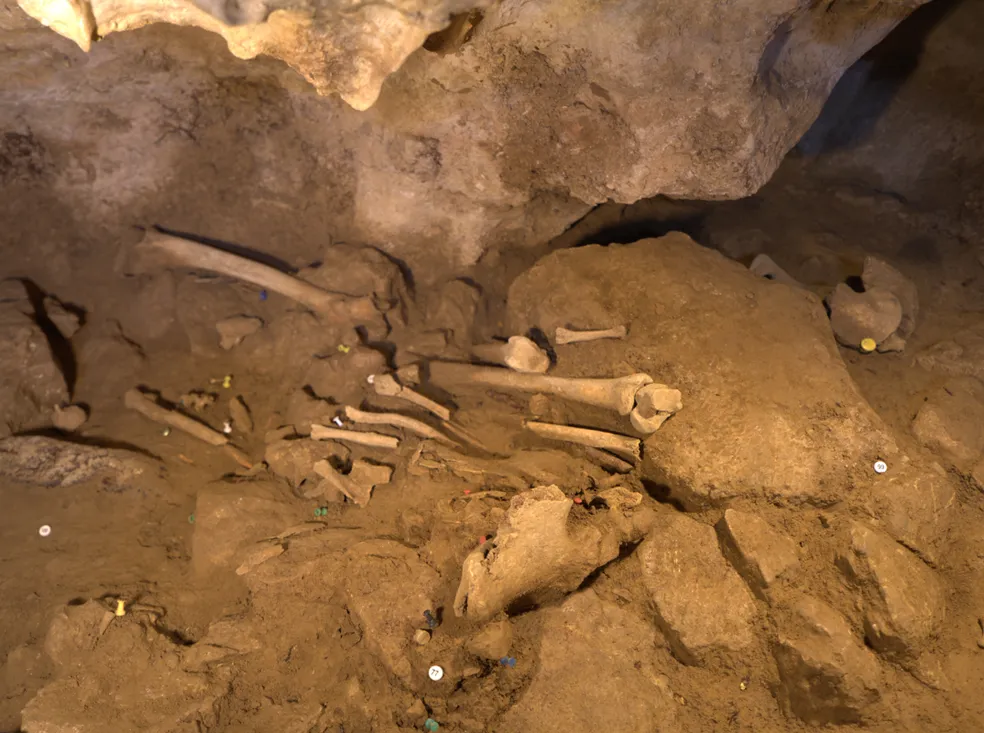
One of this year's most important discoveries was the recovery of several human anatomical segments that remain connected. These include a complete pelvis associated with the sacrum and several lumbar vertebrae, as well as parts of both lower limbs of an adult, including tibiae, fibulae and tarsal bones.
Unlike remains recovered during previous campaigns, which were mostly disarticulated, these newly discovered assemblages preserve anatomical relationships that provide information about how the funerary deposit formed.
These are not complete articulated skeletons, but body parts that were moved from their original positions while the cave was in use as a collective burial site. The fact that some joints remained connected indicates that these movements took place while at least some of the tissues holding the bones together were still present.
As Antonio Rodríguez-Hidalgo, an IAM researcher and co-director of the excavation, explains: “Finding anatomical segments that still preserve connections between bones tells us that these body parts were moved while connective tissues were still present. This helps us understand how bodies were managed and the burial space reorganised throughout the cave's continued use.”
The handling and redistribution of human remains is a known phenomenon in collective burials from later prehistory, where the successive addition of new individuals could involve moving remains from earlier burials. In this context, studying the spatial distribution of bones and their anatomical connections will help reconstruct in greater detail the history of Cova dels Xaragalls as a funerary space.
Regarding chronology, the research team is awaiting the results of radiocarbon dating carried out on cranial remains recovered during the 2025 campaign from the same burial context. These analyses will help establish more precisely the age of the burials.
Two small polished-stone adzes raise new questions
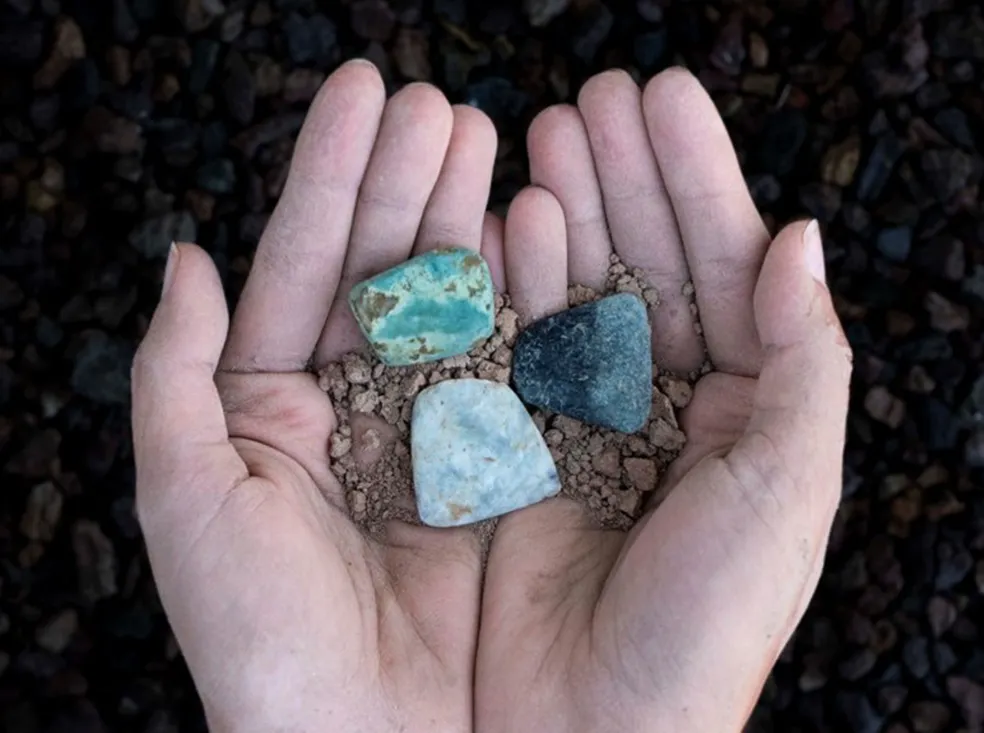
The archaeological materials recovered during this campaign also include two small polished-stone axes, approximately three centimetres long, made from very hard rocks whose mineralogical composition has yet to be characterised.
The small size of these objects raises questions about their possible practical or symbolic role in the funerary context. Polished-stone objects are known from Neolithic collective burials and other periods of later prehistory, although their interpretation depends on the characteristics of each archaeological assemblage.
Both objects will be examined by the use-wear analysis team at IPHES-CERCA, which will investigate possible manufacturing and use traces. These studies will help determine whether the objects were tools used before being deposited in the cave or whether they may have served a primarily symbolic or funerary purpose.
New Pleistocene deposits open up further research opportunities
Beyond the funerary contexts, the campaign has also yielded new information about the cave's earliest occupations. Specifically, Pleistocene sedimentary layers containing large-mammal remains, including red deer (Cervus elaphus), have been identified at entrance B.
Until now, the main palaeontological deposits of this age were known from entrance A. The identification of Pleistocene sediments at entrance B suggests that these deposits may extend further than previously thought and opens up new opportunities to investigate the cave's history.
The discovery is particularly interesting because entrance B provides access to areas whose accessibility may have favoured the presence of human groups during the Pleistocene, although this possibility has not yet been confirmed archaeologically.
In this regard, Josep Vallverdú, an IPHES-CERCA and URV researcher and co-director of the fieldwork, notes: “Identifying Pleistocene layers at entrance B is particularly significant because it allows us to extend our research into areas of the cave that, because of their accessibility, may have been occupied by human groups during the Pleistocene. We do not yet have evidence confirming such occupations, but these deposits open up a very promising new line of research.”
Continued work will help establish the extent, chronology and palaeontological contents of these layers and investigate whether evidence of human activity is present.
New research into the diet and health of prehistoric populations
The campaign has also helped launch new lines of research into the human populations that used the cave. Two doctoral researchers at IPHES-CERCA have joined the project and will undertake their PhD research in dental anthropology, using, among other materials, human dental remains recovered from Cova dels Xaragalls.
Their research will include dental microwear analysis, which can provide information about diet and food processing, as well as the study of dental pathologies and other indicators of oral health and living conditions among prehistoric populations.
Meanwhile, three-dimensional documentation and laser scanning of the cave have continued, with support from the Non-Invasive Archaeology Laboratory (MINARQLAB) at the Institute of Archaeology of Mérida (CSIC–Regional Government of Extremadura). These techniques improve the spatial recording of archaeological deposits and finds.
IPHES-CERCA and Museu Terra strengthen their collaboration
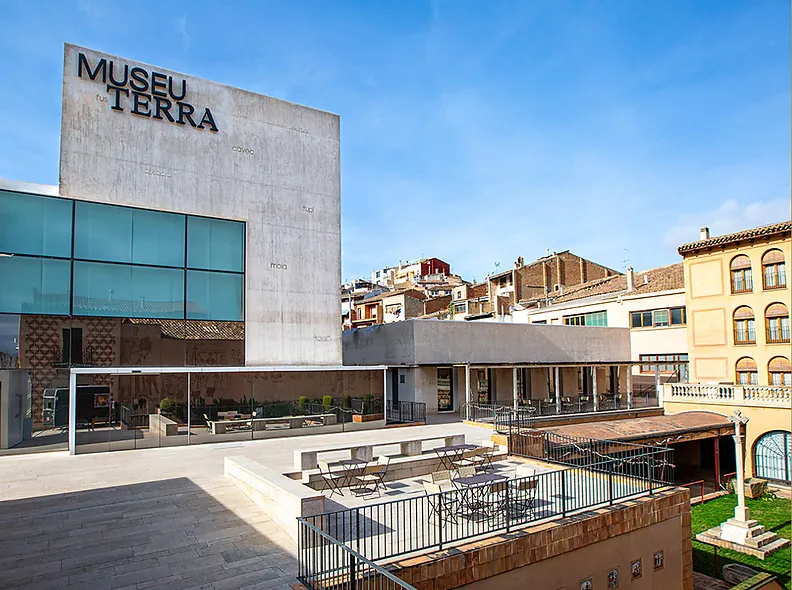
The 2026 campaign coincided with the formalisation of a new collaboration agreement between IPHES-CERCA and the Fundació Carulla, through Museu Terra in l'Espluga de Francolí, continuing the institution's support for archaeological work at Cova dels Xaragalls.
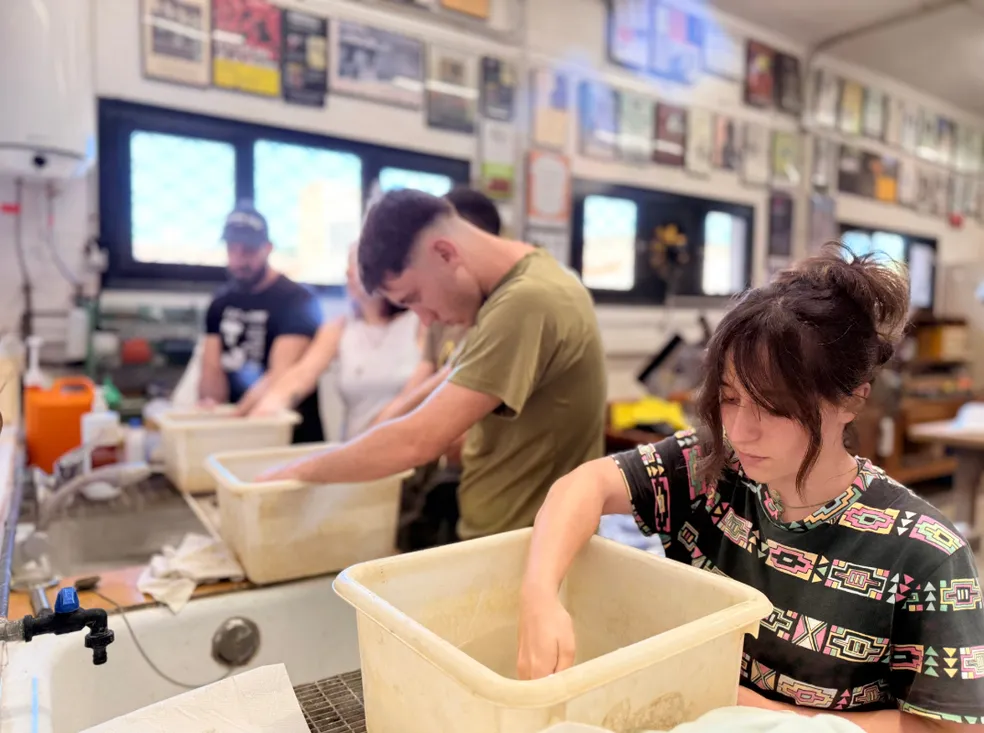
Under the agreement, Museu Terra will provide free use of the Restoration Workshop in its Reserve Collection area for excavation-related laboratory work, including cleaning, inventorying, documenting and packaging archaeological materials, as well as preparing the archaeological fieldwork report.
This collaboration allows an essential part of the research to be carried out close to the site and strengthens ties between scientific research, university education and cultural institutions in Conca de Barberà.
The fieldwork was made possible by permission from Finca Grans Muralles (Torres family) and the collaboration of the Poblet Natural Area of National Interest (PNIN) and Museu Terra of the Fundació Carulla.
The work forms part of the four-year project “Evolució paleoambiental i poblament prehistòric a les comarques tarragonines” (Palaeoenvironmental evolution and prehistoric settlement in the Tarragona region), funded by the Department of Culture of the Government of Catalonia under its four-year research projects programme (ref. ARQ001SOLC-287-2025). Directed by Josep Maria Vergès and Palmira Saladié, the project is being carried out at IPHES-CERCA from 2026 to 2029.
The research also involves “Bones, Diet & Sociability”, linked to the Ramón y Cajal research contracts programme (ref. RYC2022-037802-I), with funding from MCIN/AEI/10.13039/501100011033 and the European Social Fund Plus (ESF+).