



The Neanderthal world was made of wood, too
Nearly 600 exceptionally preserved wooden remains and imprints from Abric Romaní reveal that wood was a regular part of Neanderthal technology and everyday life between 62,000 and 40,000 years ago
Published in Science Advances, the study documents a remarkably diverse wooden technology, including spears, tools, possible bark containers, structural elements and a unique mace-shaped object
Stone tools have dominated our understanding of Neanderthal technology for decades. But a fundamental part of their material culture has almost entirely disappeared: wood. A study of 597 wooden remains and imprints from 16 archaeological levels at Abric Romaní, in Capellades (Barcelona), shows that Neanderthals made recurrent and diverse use of this raw material—not only as fuel, but also to make weapons, tools and domestic objects, and possibly to build or modify the spaces they lived in. The assemblage provides a rare glimpse into a material that, because wood is perishable, is almost always missing from the archaeological record.
Published in Science Advances, the study presents the first comprehensive analysis of the wooden record recovered during more than four decades of excavations at Abric Romaní. The research is led by Dr Palmira Saladié, researcher at IPHES-CERCA and associate professor at Universitat Rovira i Virgili (URV), and involves a broad international team of researchers and technical staff.
Evidence from other European sites had already shown that Neanderthals worked wood. What makes Abric Romaní exceptional is that it allows researchers to trace the use of wood over thousands of years and across successive occupations of the same living space. The sequence, spanning approximately 62,000 to 40,000 years ago, shows that wood was not an occasional resource, but a regular part of Neanderthal life.
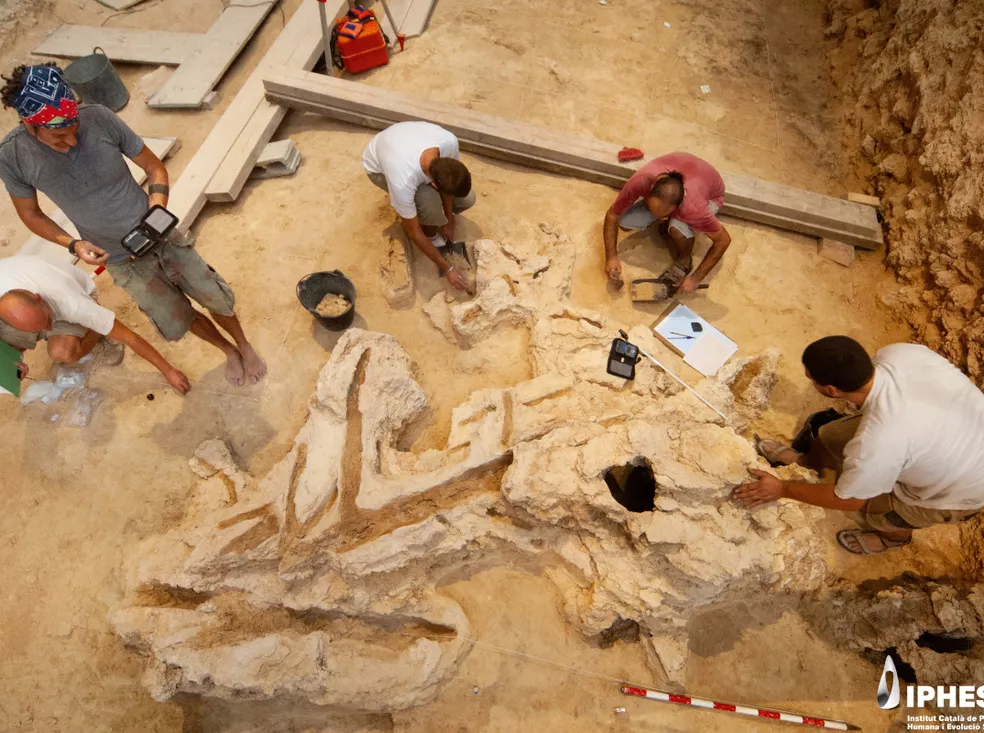
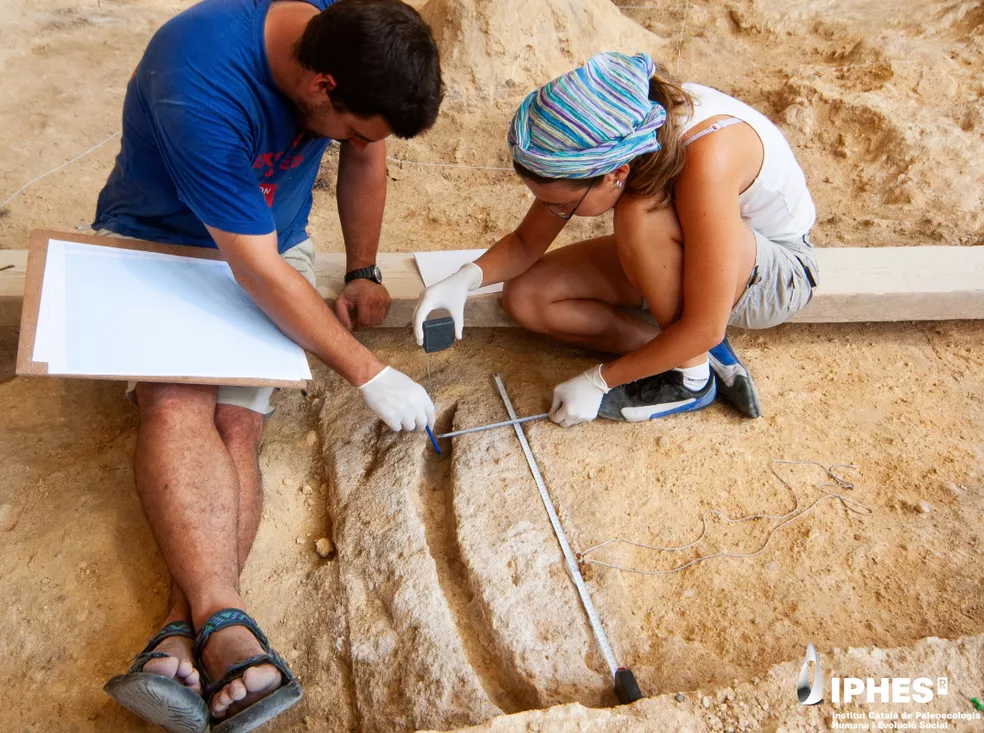
But how can traces of wood survive for tens of thousands of years? At Abric Romaní, calcium carbonate deposits formed around the wood. As the organic material eventually decayed, it left behind natural moulds in the travertine that preserved its original shape with remarkable precision. In some cases, these imprints are so detailed that even histological features of the wood can still be observed.
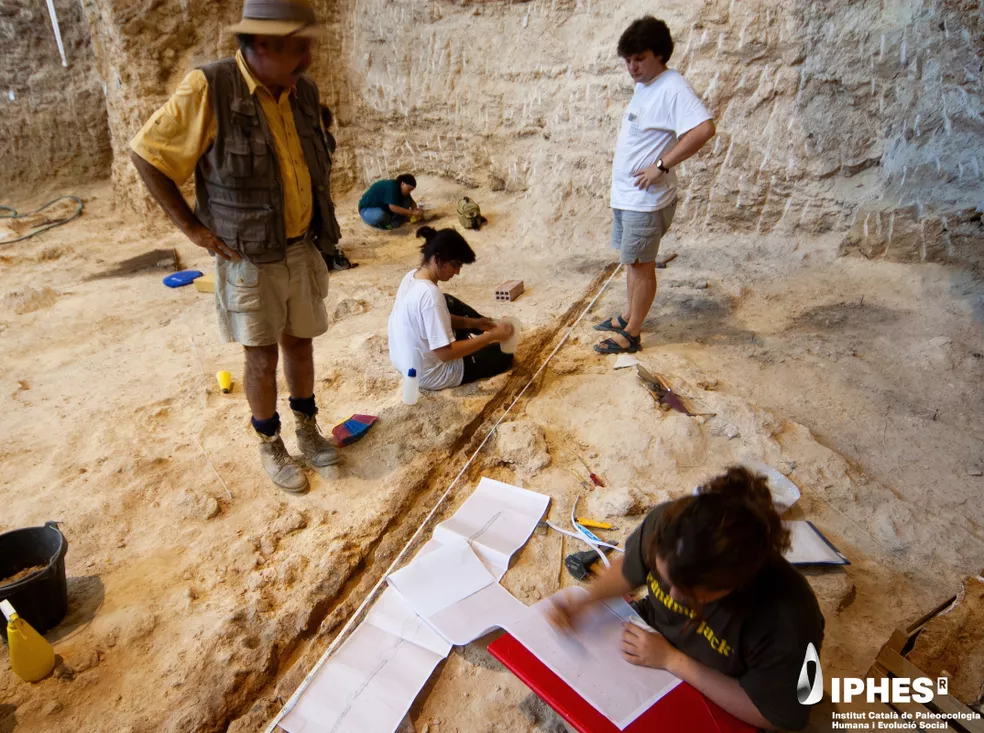
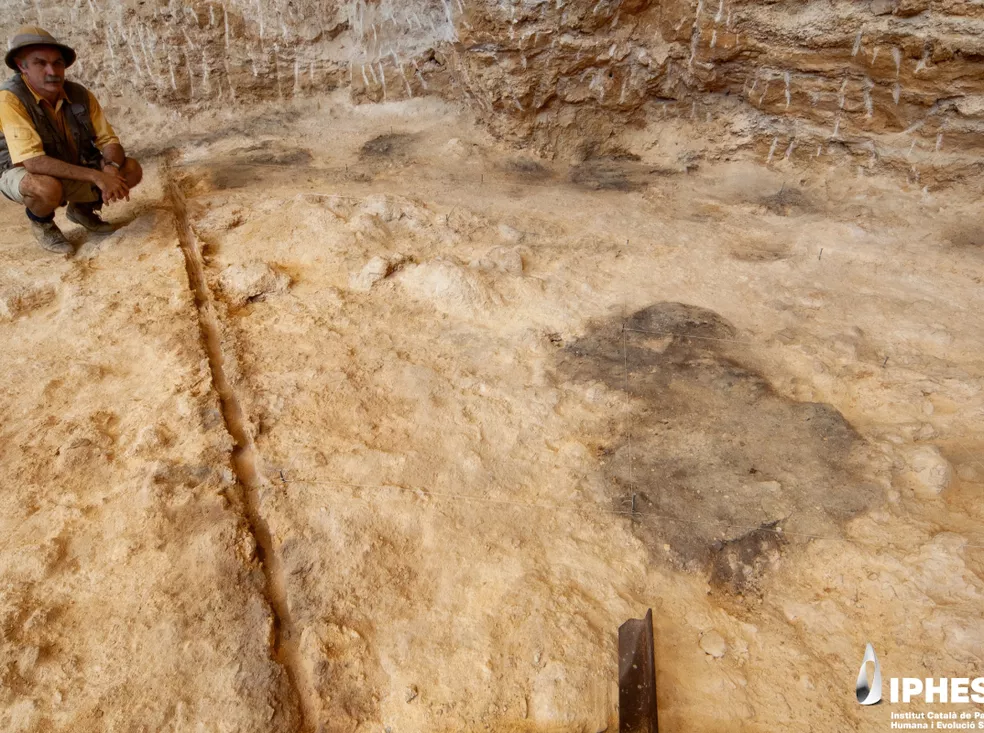
These exceptional preservation conditions provide an unusually complete view of Neanderthal living spaces. Hearths, stone tools, animal remains and wooden elements are preserved within the same archaeological contexts, allowing researchers to reconstruct not only what Neanderthals did, but also how they organised their activities, managed resources and structured the spaces in which they lived.
“What is extraordinary about Abric Romaní is that we can see things that usually disappear. We have the hearths, the stone tools, the animals they processed, and also the wood. When we bring all of this together, we can understand not only what Neanderthals were doing, but also how they organised the spaces they lived in, managed fire and other resources, and carried out their everyday activities,” explains Palmira Saladié, IPHES-CERCA researcher and lead author of the study.
Spears, tools, containers and wooden structures
Most of the assemblage consists of trunks, branches, twigs, roots and accumulations of firewood. Among these remains, however, the team identified 13 wooden elements manufactured or used by Neanderthals, including domestic objects, structural elements, tools and weapons.
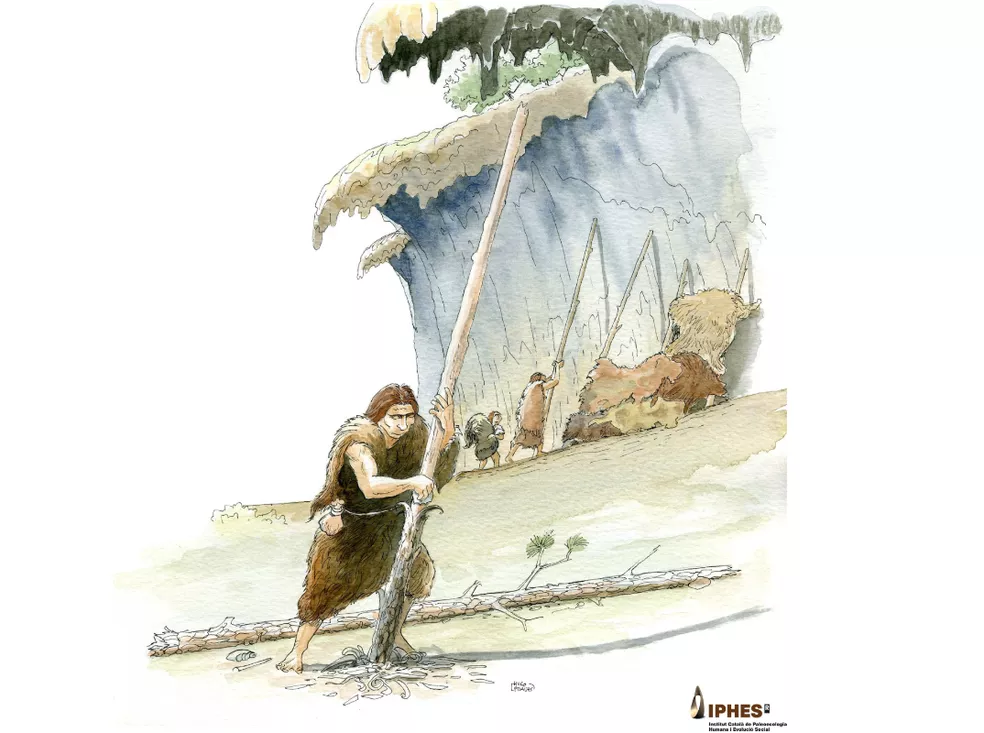
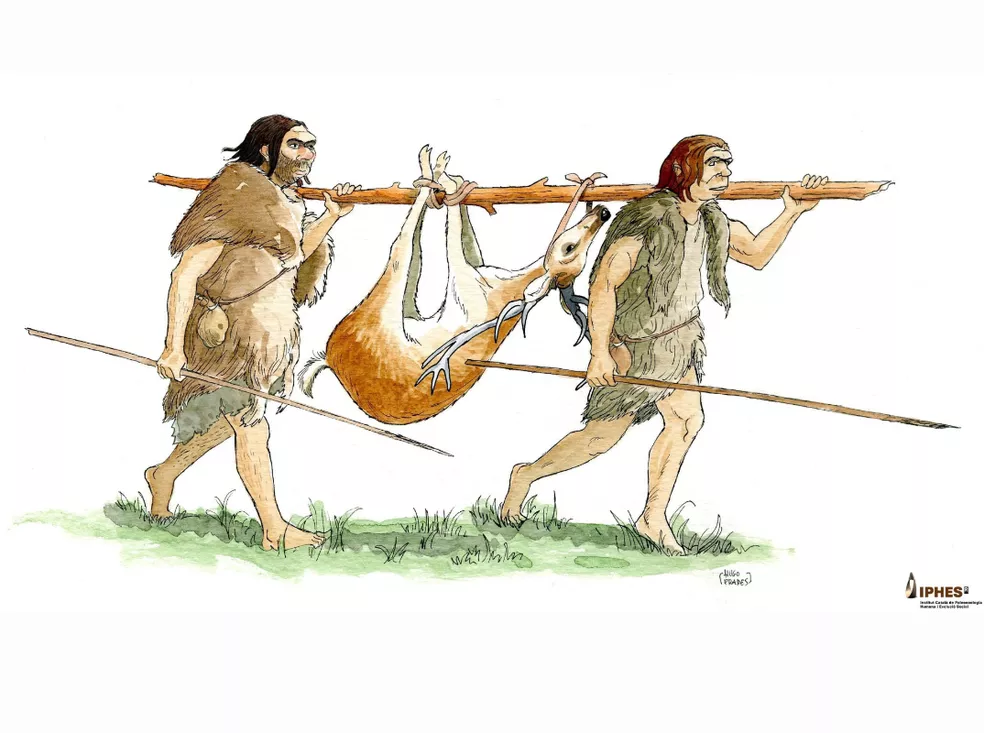
Among the most striking finds are two wooden spears recovered from Level R. One is 2.45 metres long and has a morphology consistent with a thrusting spear, designed for use at close range. The second is preserved to a length of 1.99 metres and also has a pointed end, with clear evidence that the wood was intentionally worked. Together, the two objects add to the scarce record of preserved wooden weapons from the European Palaeolithic, best known from sites such as Schöningen and Lehringen in Germany.
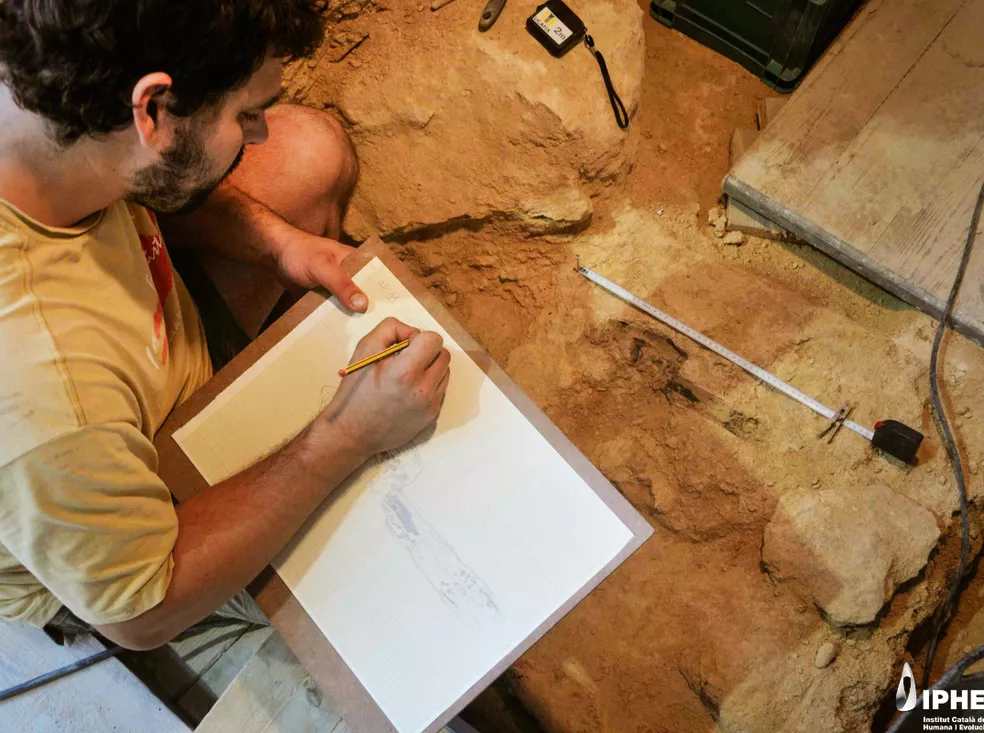
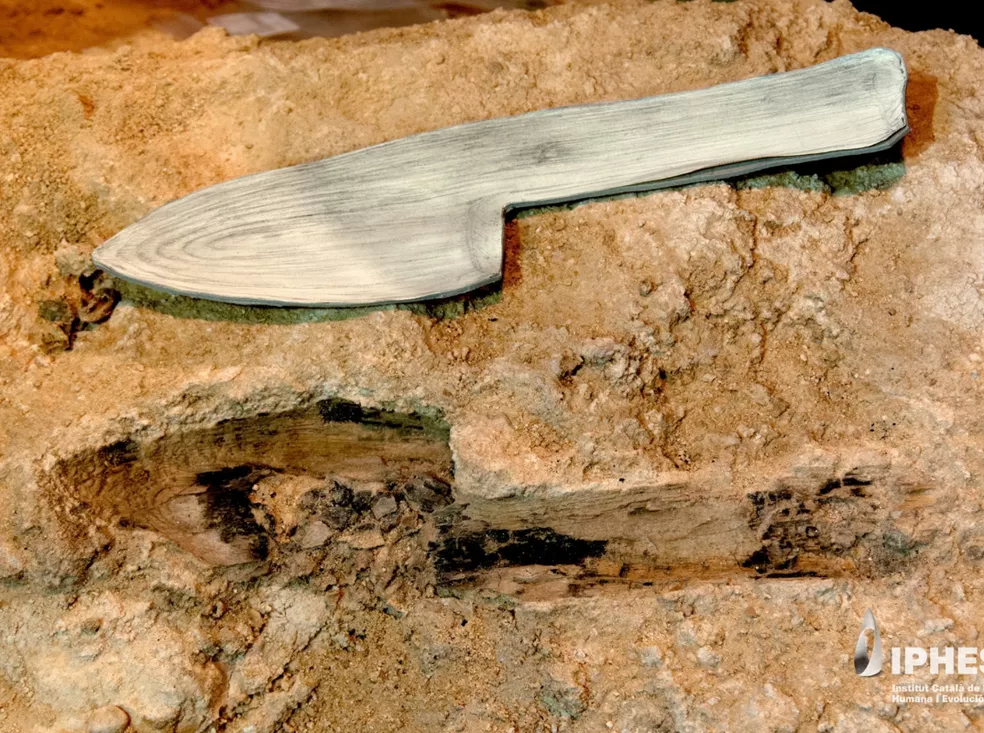
Another particularly unusual object comes from Level P. Made from a single piece of wood, it has a clearly defined handle and an enlarged, pointed end, giving it a mace-like shape. Marks preserved on its surface show that it was deliberately shaped. Its function, however, remains open to interpretation, and the object has no clear known parallels.
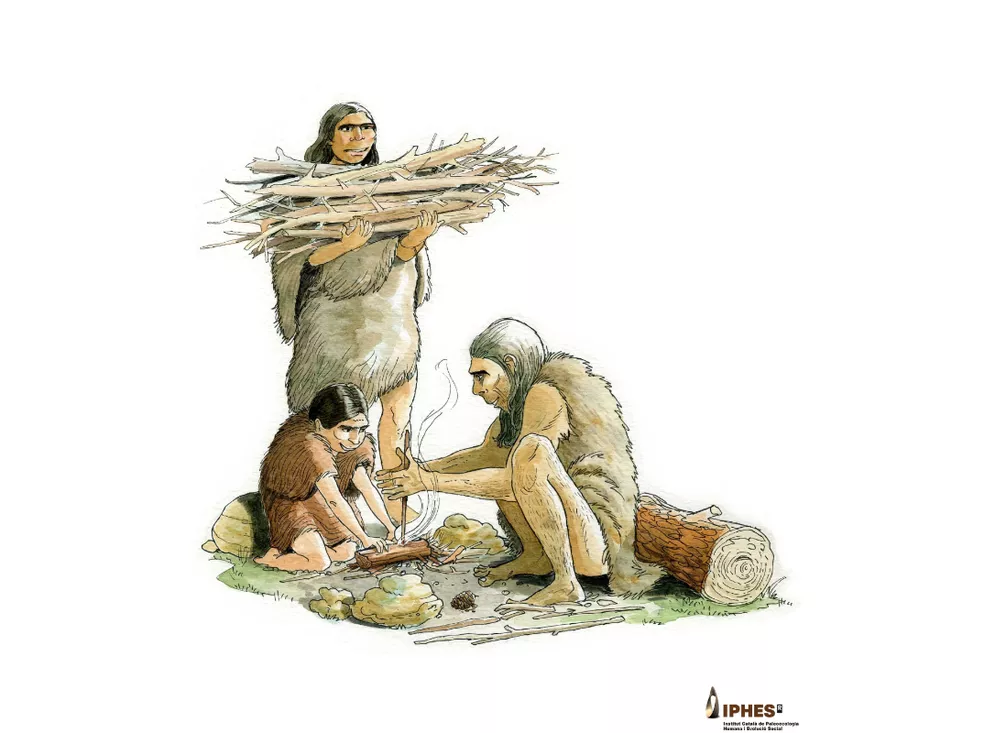
Weapons were only one part of this wooden technology. The assemblage also includes possible bark containers or trays, crossed wooden poles that may have formed part of a raised structure for food preparation, and a 5.10-metre-long straight wooden element that may have been structural or used to modify the living space. Wood was also essential as fuel, and the accumulations found at the site reveal different strategies for collecting, transporting and storing firewood.
“Wood allows us to recover a fundamental part of the Neanderthal world that is usually invisible in the archaeological record. What we see at Abric Romaní is that this material was part of many aspects of their everyday lives and that Neanderthal technology therefore extended far beyond stone,” says Josep Vallverdú, researcher at IPHES-CERCA and associate professor at URV.
More than 40 years of research
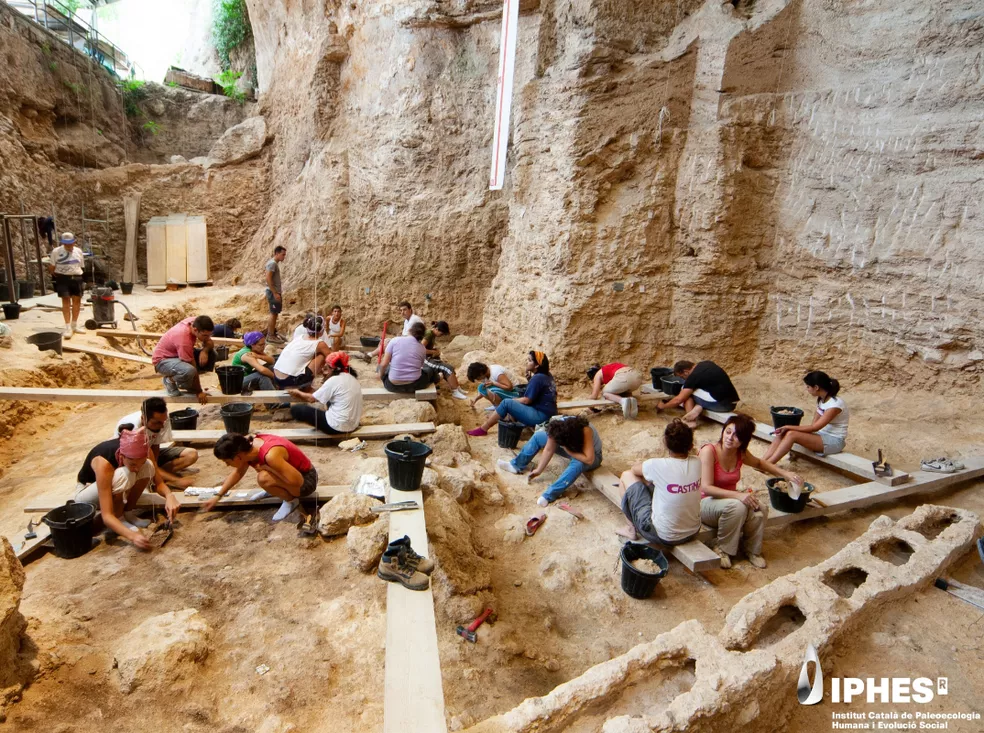
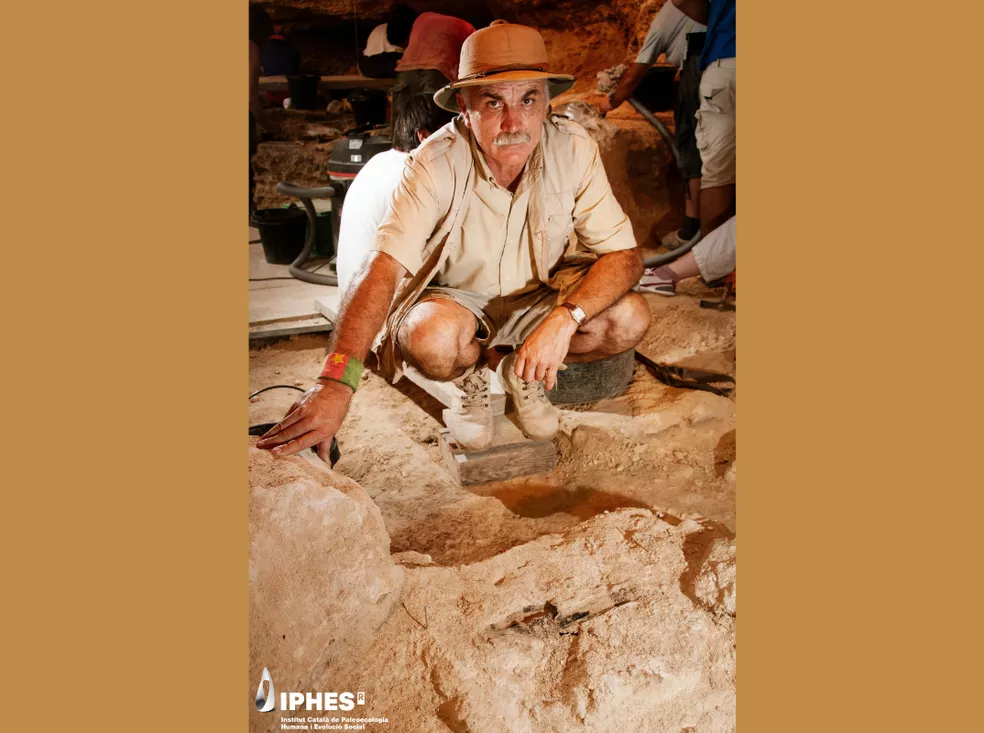
Systematic excavations at Abric Romaní began in 1983 and were promoted and led for decades by Dr Eudald Carbonell. They have revealed an extensive sequence of Neanderthal occupations and made it possible to reconstruct many of the activities carried out at the site with exceptional spatial resolution. Excavations are currently directed by Dr Palmira Saladié, Dr M. Gema Chacón and Dr Josep Vallverdú, researchers at IPHES-CERCA.
More than four decades of research now make it possible to interpret the wooden record alongside hearths, animal remains and stone tools, reconstructing a part of the Neanderthal world that has simply disappeared from most archaeological sites.
Reference
Saladié, P., Chacón, M. G., Solé, A., Allué, E., Marín-Hernando, J., Gómez de Soler, B., Romagnoli, F., Bargalló, A., Vaquero, M., Mateo-Lomba, P., García-Millán, M., Gabucio, M. J., Pineda, A., Fernández-García, M., Campeny, G., Merino-Pelaz, A., Warnitz, L., Fernández-Iriarte, T., Bartrolí, R., Carbonell, E., & Vallverdú, J. Reconstructing Neanderthal woodworking at Abric Romaní (Capellades, Barcelona): Insights into the role of wood in a Middle Palaeolithic domestic context. Science Advances. DOI: http://dx.doi.org/10.1126/sciadv.aeh2287
Funding
The archaeological work at Abric Romaní forms part of the four-year project Territoris Prehistòrics a la Conca de l’Anoia (2026–2029), approved by the Department of Culture of the Government of Catalonia. The excavation campaign is funded by the Department of Culture of the Government of Catalonia (CLT009/18/00054), Capellades Town Council and sponsorship from Romanyà-Valls.
The research was also carried out within the consolidated research groups SGR 2021 01238 and SGR 2021 01239; projects 2022PFR-URV-64, 2023-2024PFR-URV-01237, 2023PFR-URV-01238 and 2023PFR-URV-01239; and projects PID2024-156477NB-C31, PID2024-156295NB-I00, PID2025-169988NB-C41 and PID2023-148678NB-I00, funded by MCIN/AEI/10.13039/501100011033 and co-funded by the European Regional Development Fund (ERDF), “A way of making Europe”.


