


New fieldwork at Taguatagua (Chile) documents an exceptional record of gomphothere processing between 13,000 and 12,000 years ago
An international team led by IPHES-CERCA has documented a large concentration of remains of these extinct proboscideans in central Chile, some bearing cut marks and associated with stone tools
The findings make it possible to reconstruct, with unusual precision, the activities of the first human groups to occupy the shores of ancient Lake Tagua Tagua
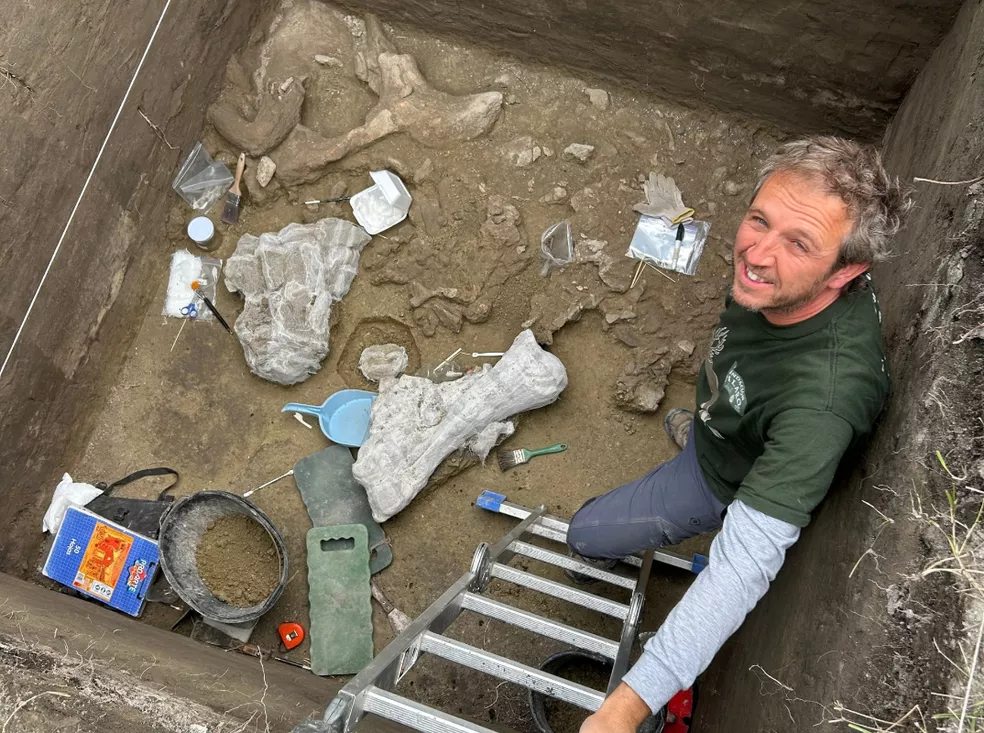
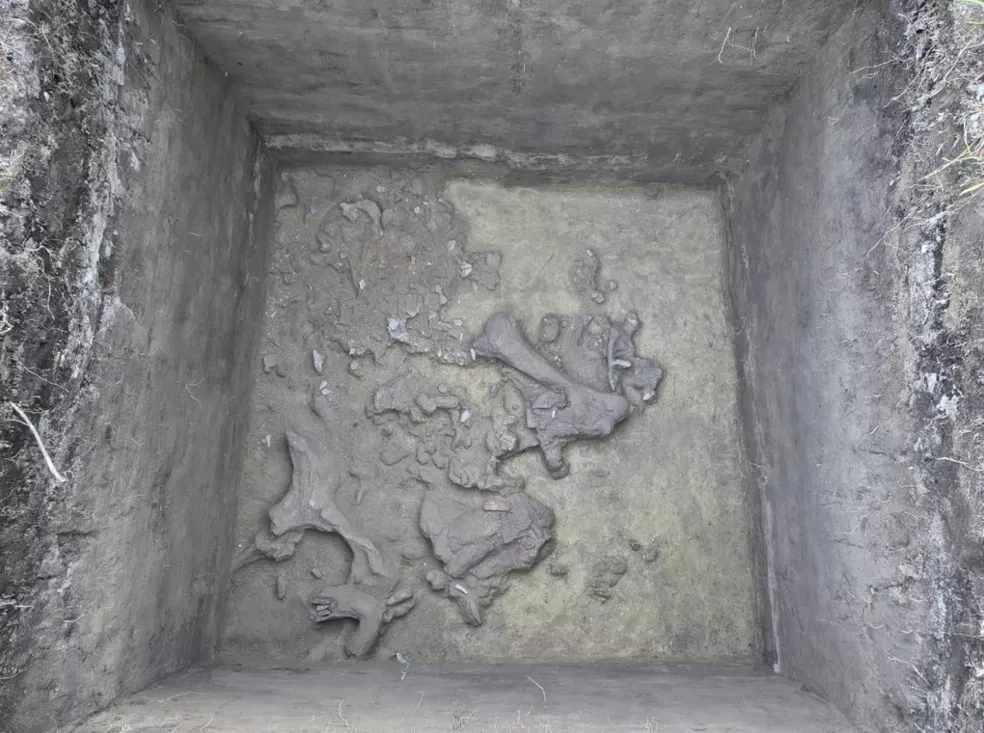
Between 31 August and 13 September, an international team led by IPHES-CERCA carried out a new excavation campaign in the basin of ancient Lake Tagua Tagua, in central Chile. The work continued the excavation of a new area opened in 2025, where a large concentration of gomphothere bone remains associated with stone tools has been documented. Several bones display clear cut marks, providing direct evidence that these animals were processed at the site. Dating to between 13,000 and 12,000 years ago, the assemblage constitutes, due to its characteristics and state of preservation, a record with no known parallels currently in South America.
The fieldwork is part of the project Primeros pasos humanos en América del Sur, caminando entre Gonfoterios (First human steps in South America, walking among gomphotheres), promoted by IPHES-CERCA and funded by the Palarq Foundation. The research is co-directed by Dr Carlos Tornero, a researcher affiliated with IPHES-CERCA and professor at the Universitat Autònoma de Barcelona (UAB); Dr Rafael Labarca, an academic at the School of Anthropology of the Pontificia Universidad Católica de Chile; and Dr Erwin González-Guarda, an academic at the Universidad de O’Higgins.
An exceptional concentration of gomphothere remains
The 2026 fieldwork continued the open-area excavation begun the previous year around two test pits that had yielded megafaunal remains associated with lithic artefacts. The progressive opening of new excavation squares has made it possible to document a larger area and better understand the spatial distribution of the finds, their stratigraphic relationships and the activities that took place there.
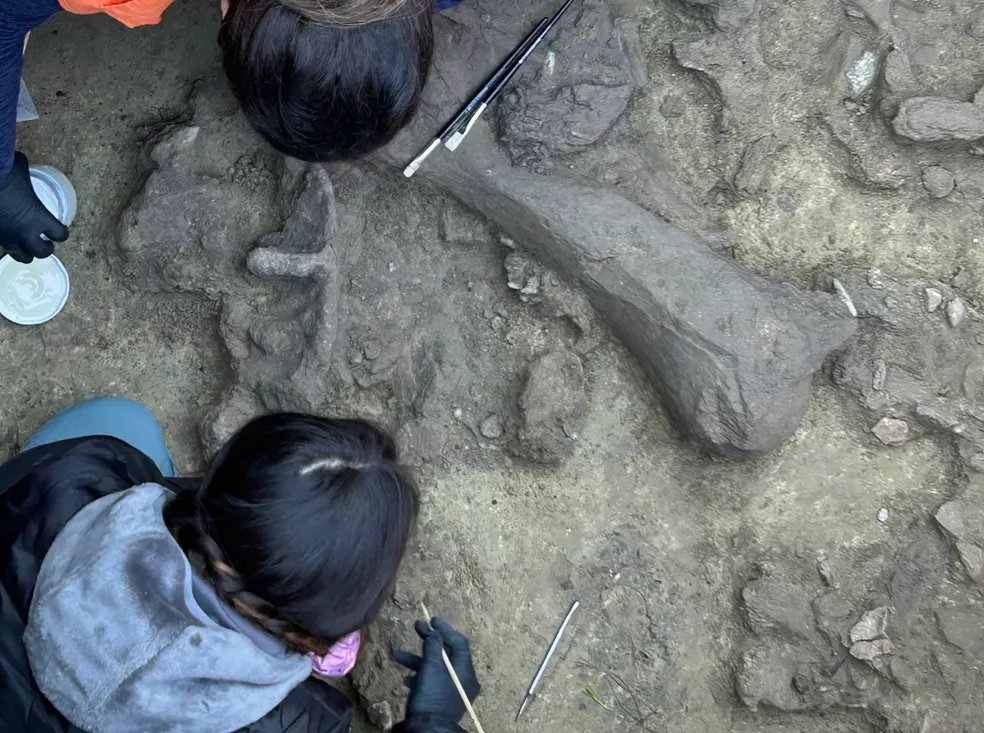
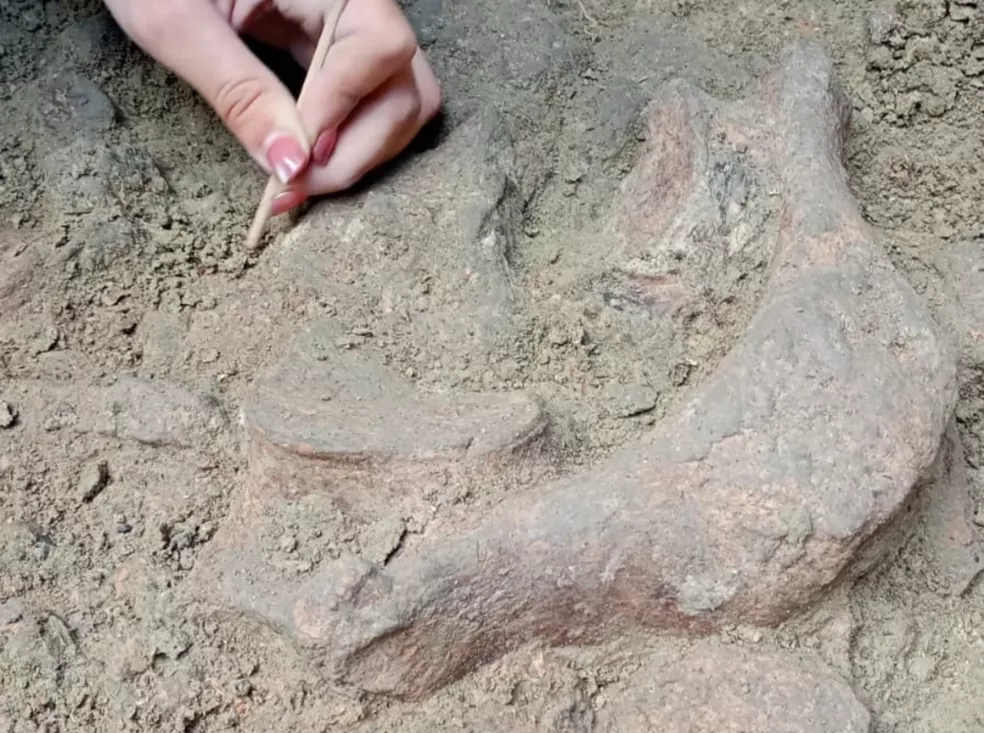
The new area preserves a very dense accumulation of gomphothere remains, extinct proboscideans related to modern elephants. Some of the bones bear incisions produced by stone tools. These cut marks provide direct evidence of human activity and confirm that the carcasses were processed in situ. Stone tools and knapping debris discarded during these activities have also been recovered alongside the bones.
The spatial association between the faunal remains, tools and manufacturing debris makes it possible to reconstruct, with unusual precision, the actions of the first human groups to occupy the shores of the ancient lake.
During the fieldwork, priority was given to horizontal excavation and three-dimensional recording of the finds in order to reconstruct the relationships between the different elements. Large remains were carefully exposed and documented, while excavated sediments were sieved to recover bone fragments, lithic remains and other small finds. Photographic and photogrammetric documentation will allow all this information to be integrated into high-resolution spatial models.
An exceptional window into the first populations of South America
The basin of ancient Lake Tagua Tagua is a key area for studying the initial peopling of the South American subcontinent. The Taguatagua 1 and Taguatagua 2 sites had already provided evidence of human activity associated with extinct fauna at the end of the Pleistocene. More recently, excavations at Taguatagua 3 have documented human occupations in a particularly favourable lakeside environment, including faunal remains, lithic artefacts, combustion features, red pigment, eggshell and charred plant remains.
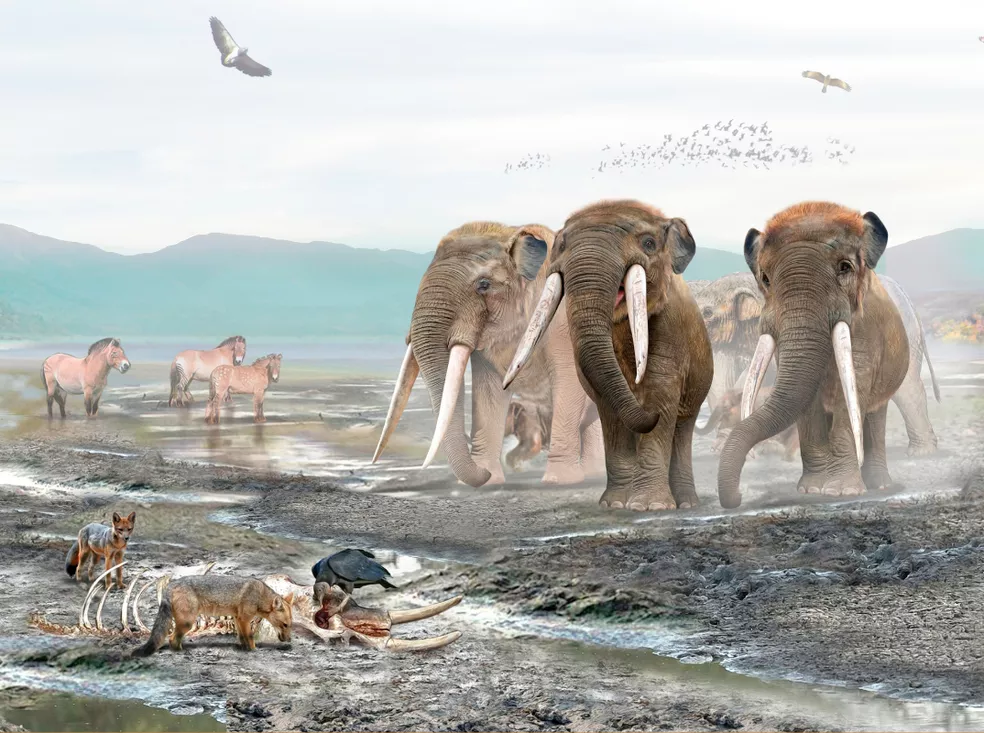
The basin’s faunal record is not limited to gomphotheres. It also includes remains of extinct American horses, represented in the region by genera such as Hippidion and Equus, and the extinct deer Antifer ultra, as well as waterbirds, fish, rodents and amphibians, including the giant Chilean frog of the genus Calyptocephalella.
This mosaic of large and small animals reflects the ecological richness of the ancient lake and helps reconstruct the resources available to the first human populations of central Chile. Evidence of combustion and cut marks documented on some remains indicate the exploitation of different animals, although other accumulations, particularly some of the fish and amphibian remains, may also be the result of natural processes.
Surveys and test excavations carried out by the project in 2023 and 2024 expanded this picture and led to the identification of an archaeological zone approximately 160 metres long, interpreted as an ancient lakeshore repeatedly visited by hunter-gatherer groups. The 2025 and 2026 excavations have focused on one of the most promising sectors of this area, where the density of gomphothere remains and the presence of stone tools make it possible to study the processing of these large animals in unusual detail.
The assemblage, dated to between 13,000 and 12,000 years before present, corresponds to a crucial period in the peopling of South America and to the final phases of existence of much of the continent’s megafauna. The Taguatagua record provides an opportunity to investigate how these groups organised the processing of large herbivores, what technologies they used and how they incorporated terrestrial and aquatic resources from an exceptionally productive lakeside landscape.
An international project coordinated by IPHES-CERCA
The project Primeros pasos humanos en América del Sur, caminando entre Gonfoterios continues the systematic research resumed in the Tagua Tagua basin in 2019 and the work funded by the Palarq Foundation since 2020.
Its interdisciplinary approach combines archaeological excavation, zooarchaeology, palaeontology, geology, chronology, palaeoenvironmental studies and biomolecular analyses to reconstruct the lifeways and adaptation strategies of the earliest hunter-gatherer communities of central Chile.
With the fieldwork now completed, the team is beginning a detailed study of the recovered remains and sediment samples. These analyses will help refine the chronology, identify modifications produced during animal processing and reconstruct the formation of the assemblage. Continued excavation will be essential to determine the extent of this accumulation and establish its relationship with the other sites in the basin.
The project involves researchers from IPHES-CERCA, the Universitat Autònoma de Barcelona, the Pontificia Universidad Católica de Chile and the Universidad de O’Higgins, with the collaboration of specialists and organisations involved in the research and protection of Chile’s archaeological heritage.