


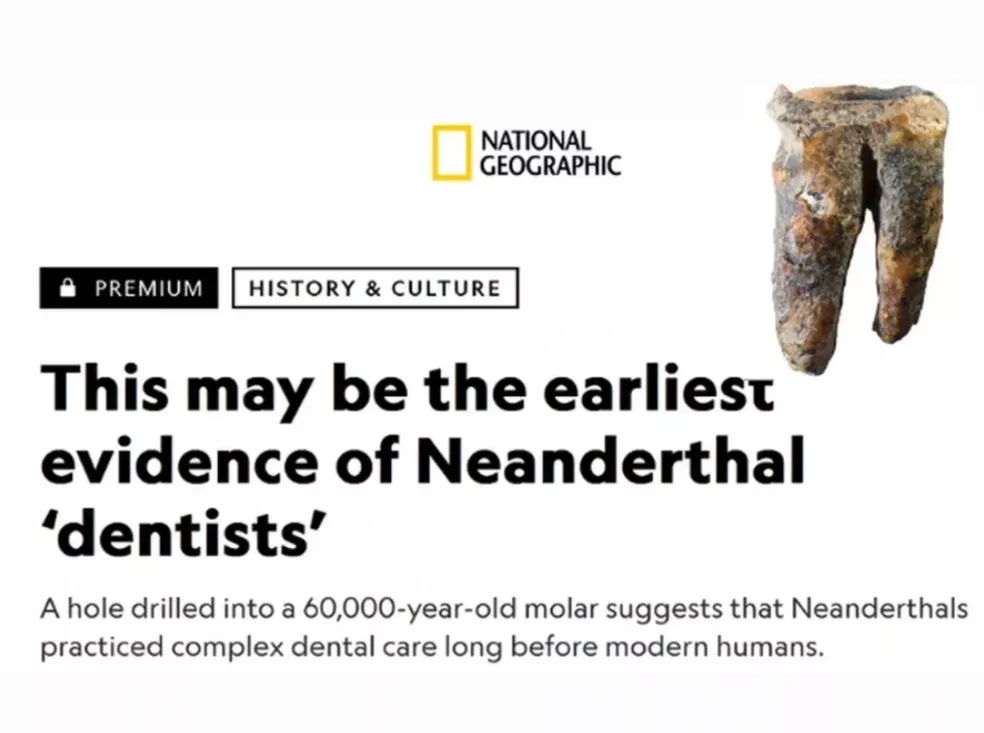
Researcher Marina Lozano contributes her expertise to National Geographic on new evidence of Neanderthal dentistry
Marina Lozano, paleoanthropologist and researcher at IPHES-CERCA, has been featured as an expert source in an article published by National Geographic about the scientific paper Earliest evidence for invasive mitigation of dental caries by Neanderthals, recently published in PLOS ONE and led by researcher Alisa Zubova.
The study presents possible evidence of dental treatment in Neanderthals based on the analysis of a molar affected by a mechanically modified cavity. In this context, Marina Lozano highlights in National Geographic the importance of the experimental work carried out by the authors to demonstrate that Paleolithic tools may have produced the marks observed on the tooth.
According to Lozano, the pathological condition of the tooth would have made the cavity easier to drill: “When the Neanderthal made the hole in the cavity on this tooth, it was probably easier to drill,” she explains.
The participation of IPHES-CERCA researchers as expert voices in leading international media outlets reflects the centre’s international recognition and visibility in fields related to human evolution, paleoanthropology and the study of prehistoric human behaviour.