


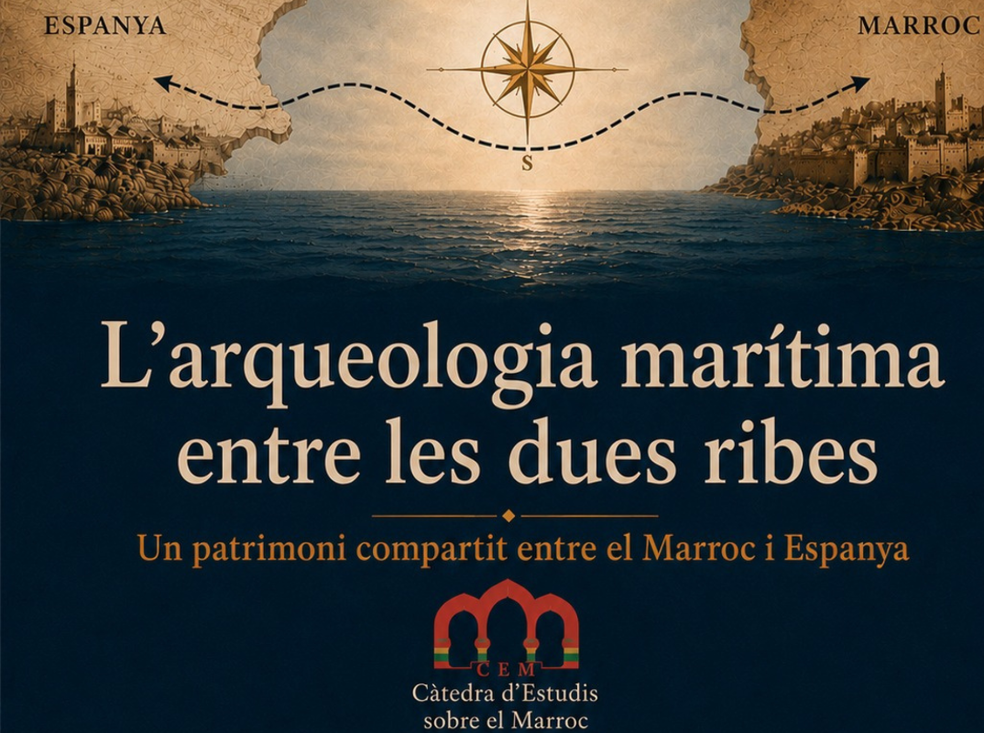
IPHES-CERCA strengthens scientific cooperation with Morocco through a conference on shared maritime and archaeological heritage
The event, held at the Teatret del Serrallo in Tarragona, brought together specialists from Catalonia and Morocco and helped foster new avenues of collaboration between research institutions from both countries
The Catalan Institute of Human Paleoecology and Social Evolution (IPHES-CERCA) played an active role in the conference “Maritime Archaeology Between Two Shores: A Shared Heritage Between Morocco and Spain”, held on 21 May at the Teatret del Serrallo in Tarragona. The meeting brought together institutional representatives, researchers and heritage specialists with the aim of reflecting on the shared historical richness of both shores of the Mediterranean and strengthening existing scientific cooperation links.
The event formed part of the initiatives promoted by the Chair of Moroccan Studies at the Universitat Rovira i Virgili (URV) and was organized at the initiative of the Consulate General of the Kingdom of Morocco in Tarragona, in collaboration with the Institut National des Sciences de l’Archéologie et du Patrimoine (INSAP), IPHES-CERCA and Mohammed Premier University of Oujda.
IPHES-CERCA had a prominent presence through Dr. Robert Sala-Ramos, researcher at the institute and professor at URV, who presented the experience accumulated over more than twenty years of joint research between Catalan and Moroccan teams. This scientific collaboration has significantly contributed to the study of the earliest human settlements in North Africa and to the consolidation of a stable academic cooperation network between both territories.
The conference also featured presentations by Dr. Abdeljalil Bouzouggar, Director of INSAP, and Dr. Mohammed Chadli, researcher at the same institution, who presented several recent archaeological discoveries made in Morocco. The various contributions highlighted the importance of archaeological research and heritage preservation as essential tools for deepening our understanding of the societies that have shared the Mediterranean space throughout history.
Beyond the academic conference, the INSAP delegation’s visit to Tarragona included working meetings and institutional encounters with IPHES-CERCA and other research centres in the region. These meetings helped advance new lines of international collaboration and strengthen the joint scientific projects currently being carried out between Catalonia and Morocco.
Among the agreements reached was the commitment to promote a cooperation agreement between INSAP, Mohammed Premier University of Oujda and IPHES-CERCA, with the aim of strengthening research, training and knowledge-transfer activities in the fields of archaeology and human evolution studies.
More than twenty years of shared research
IPHES-CERCA has maintained close scientific ties with several Moroccan institutions for more than two decades. This collaboration is particularly reflected in the projects carried out in the Aïn Beni Mathar–Guefaït Basin, in eastern Morocco, co-directed by Dr. Robert Sala-Ramos and Dr. María Gema Chacón, researchers at IPHES-CERCA and professors at URV, together with researchers from Mohammed Premier University of Oujda.
These investigations have turned northeastern Morocco into a key reference area for the study of the earliest human settlements in North Africa and have contributed to consolidating a stable scientific partnership between institutions from both countries, based on joint research, researcher training and knowledge exchange.
The conference held in Tarragona highlighted the strength of this shared trajectory and the commitment to continue expanding academic and scientific ties between Catalonia and Morocco through new research projects and international cooperation initiatives.