


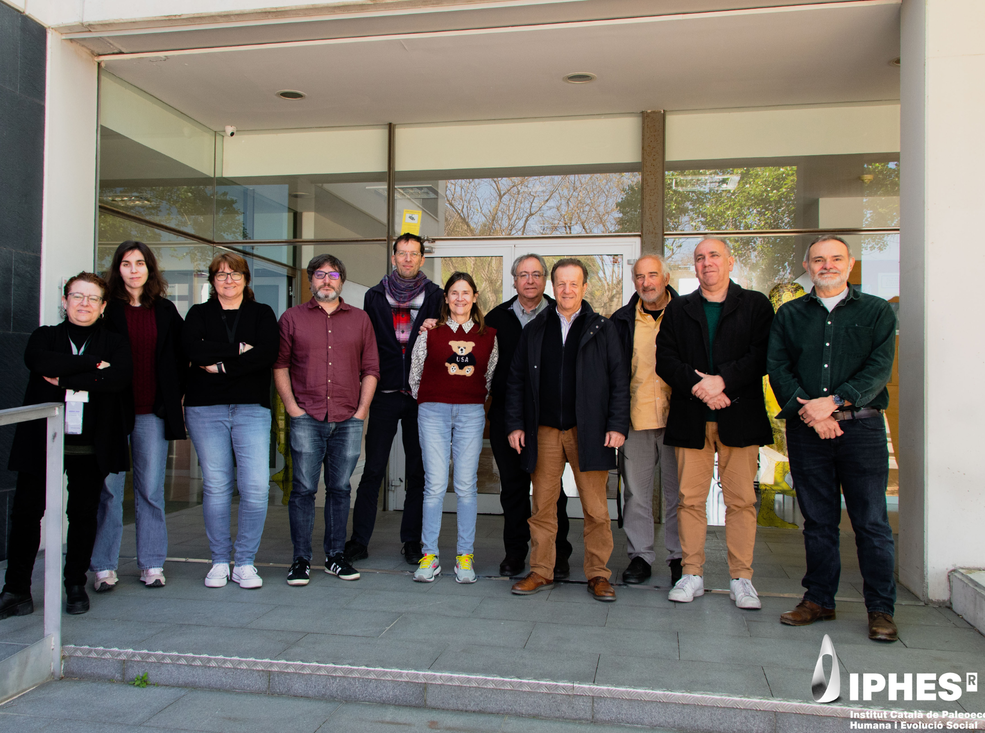
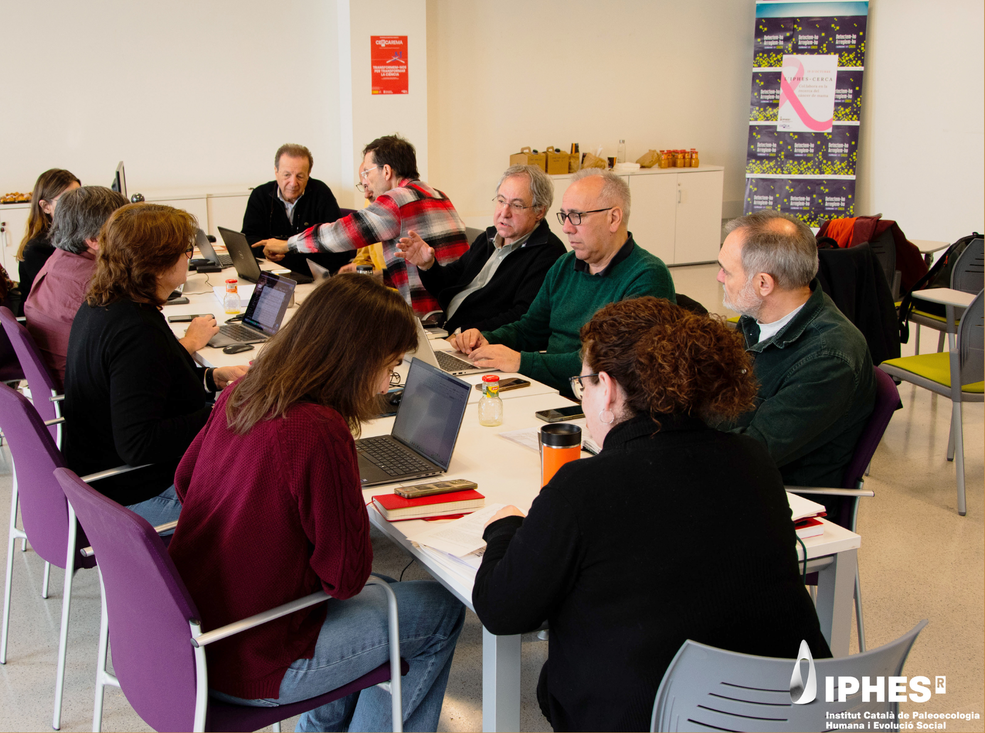
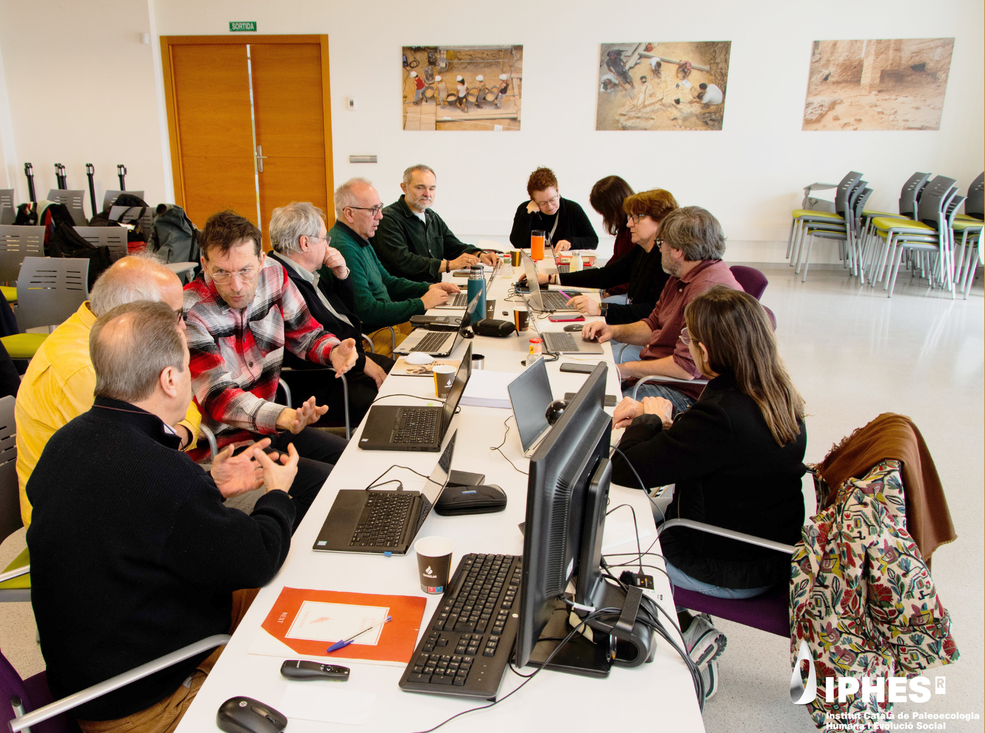
Working meeting at IPHES-CERCA to advance research on the Petralona site
An international and multidisciplinary research team has met at the Catalan Institute of Human Paleoecology and Social Evolution (IPHES-CERCA) to share and discuss the analytical results obtained in recent years at the Greek site of Petralona (Chalkidiki, Macedonia), with the aim of advancing its interpretation and preparing a joint scientific publication.
The workshop, held between 25 and 27 March, is part of the research coordinated by Dr. Andreas Darlas and has provided an opportunity to compare data and integrate different analytical approaches concerning the chronology, palaeoecology and behaviour of the human groups that occupied the cave during the Middle Pleistocene.
A key site under revision
The Petralona site has been known since the 1960s following the discovery of an exceptionally complete human skull, whose dating and attribution have been debated for decades. A recent study published in Journal of Human Evolution places this fossil at more than 286,000 years old and associates it with a population more primitive than Homo sapiens and Homo neanderthalensis.
In recent years, research led by Andreas Darlas has marked a new phase in the study of the site, with systematic excavations that allow the human remains to be contextualised within a broader archaeological record. This approach is helping to highlight the archaeological significance of Petralona in the study of the European Middle Pleistocene, beyond its initial palaeoanthropological interest.
Collaborative and interdisciplinary work
The meeting brought together researchers from various European institutions who carried out the different analytical studies, including Andreas Darlas and Athanassios Athanassiou (Greek Service of Palaeoanthropology and Speleology, Athens), Robert Sala-Ramos, Isabel Cáceres, Xosé-Pedro Rodríguez, Isabel Expósito and Antoni Canals (IPHES-CERCA, Universitat Rovira i Virgili), Christophe Falguères (Muséum National d’Histoire Naturelle, Paris), Christian Perrenoud (Centre Européen de Recherches Préhistoriques de Tautavel), Paula Mateo (PACEA, Université Bordeaux Montaigne), Gloria Cuenca (University of Zaragoza), Arturo de Lombera (University of Oviedo) and Ana Isabel Ortega (National Research Center on Human Evolution).
Holding the meeting at IPHES-CERCA reinforces, in this context, the centre’s role as a meeting point for international research in human evolution and prehistory.