


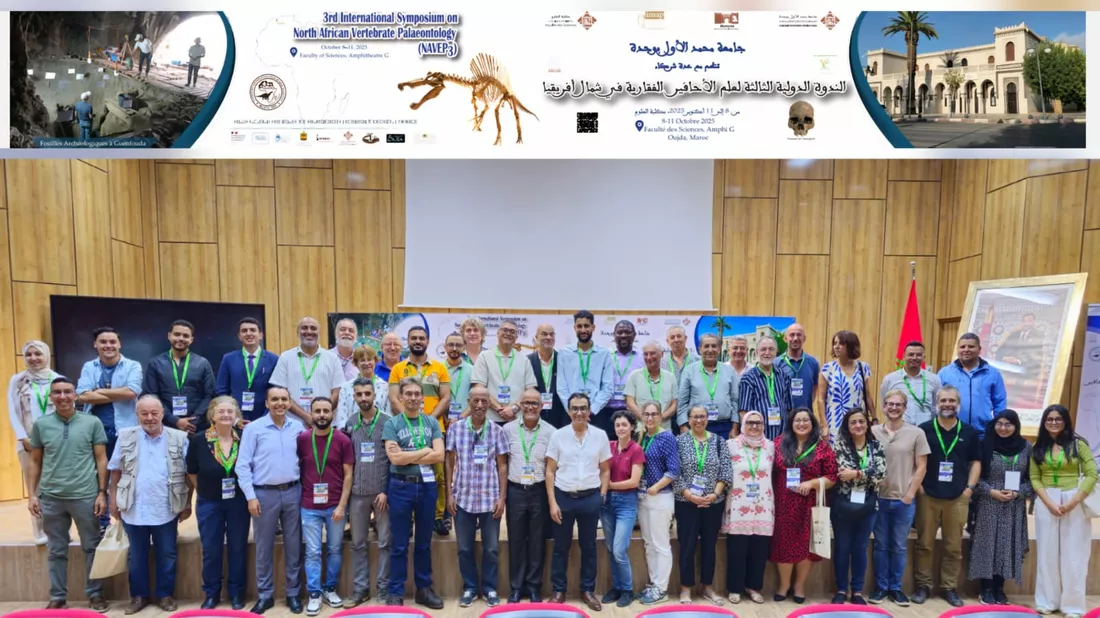
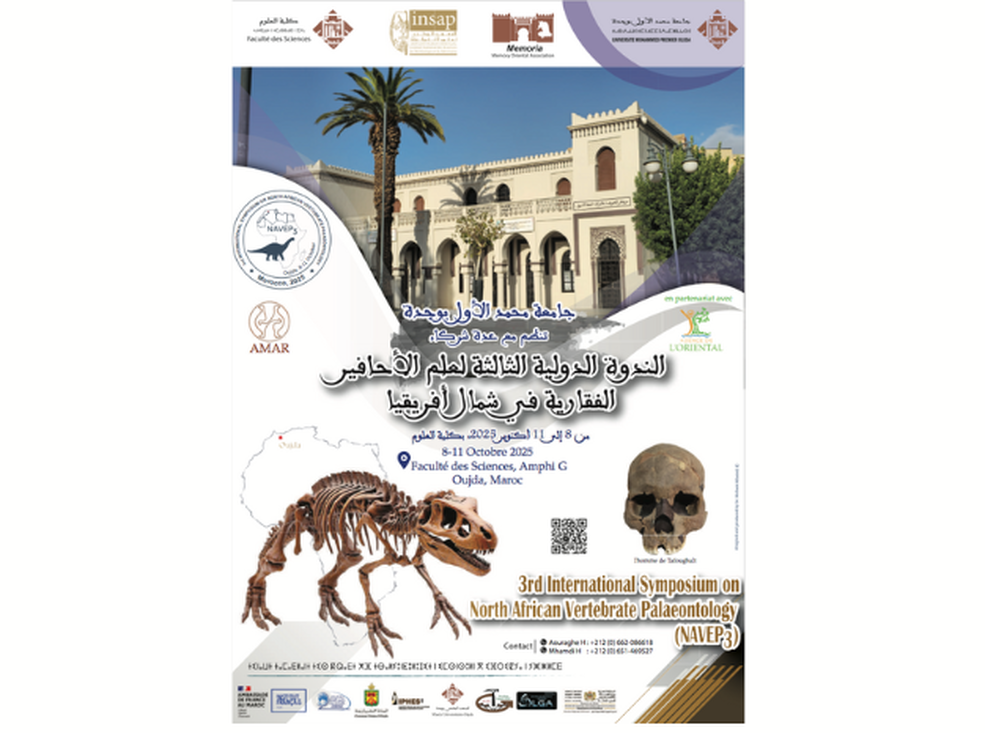
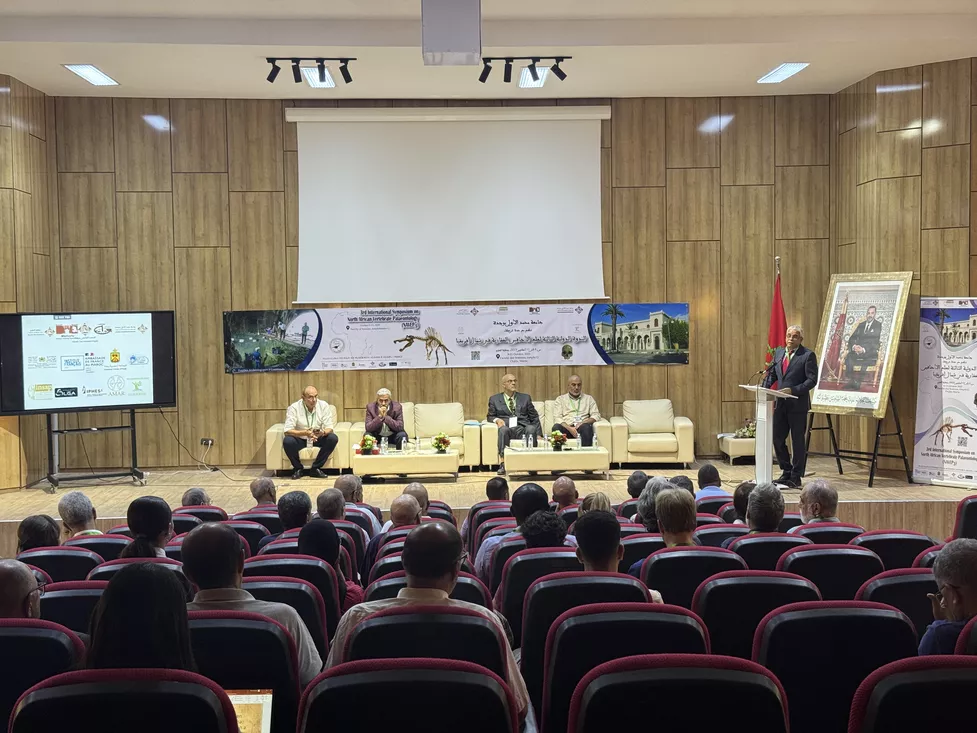
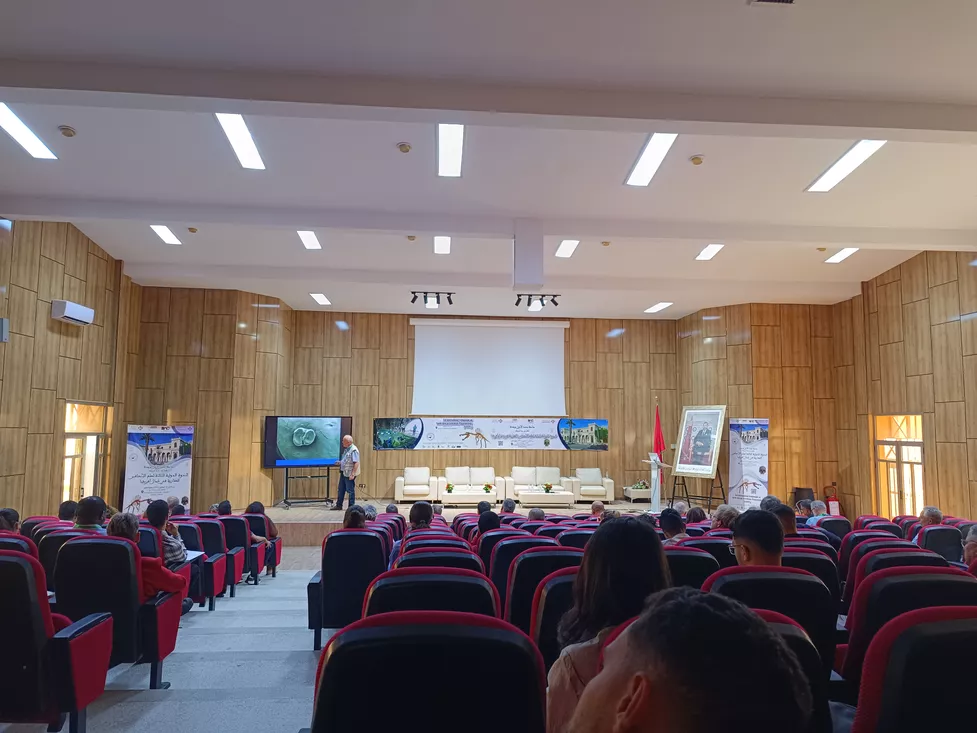
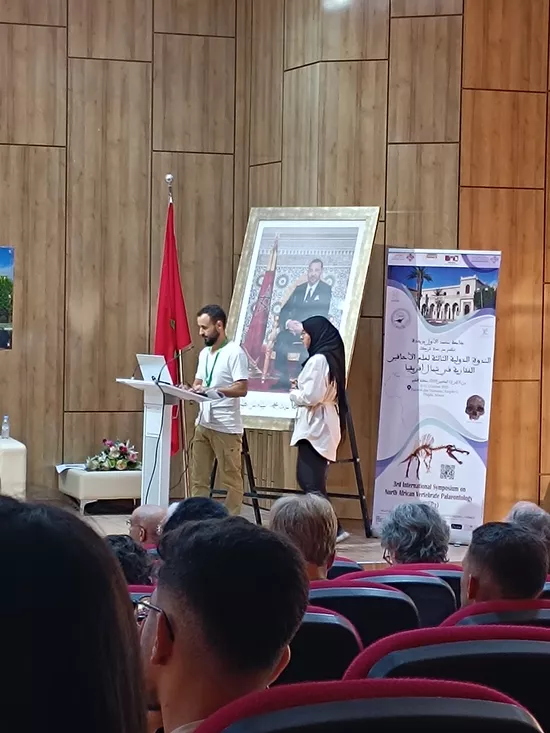
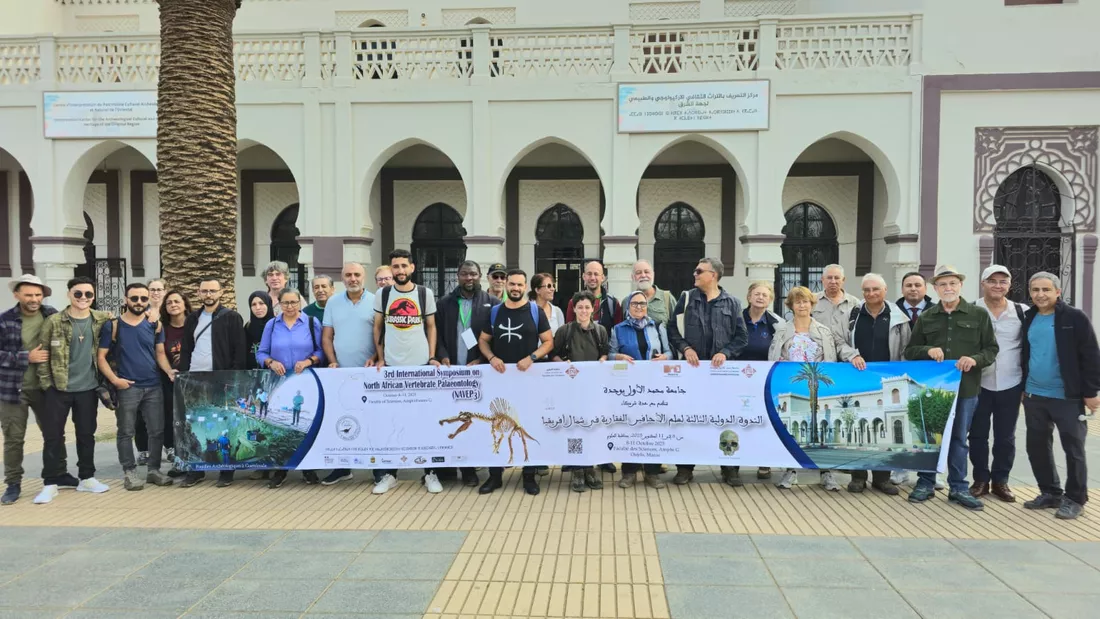
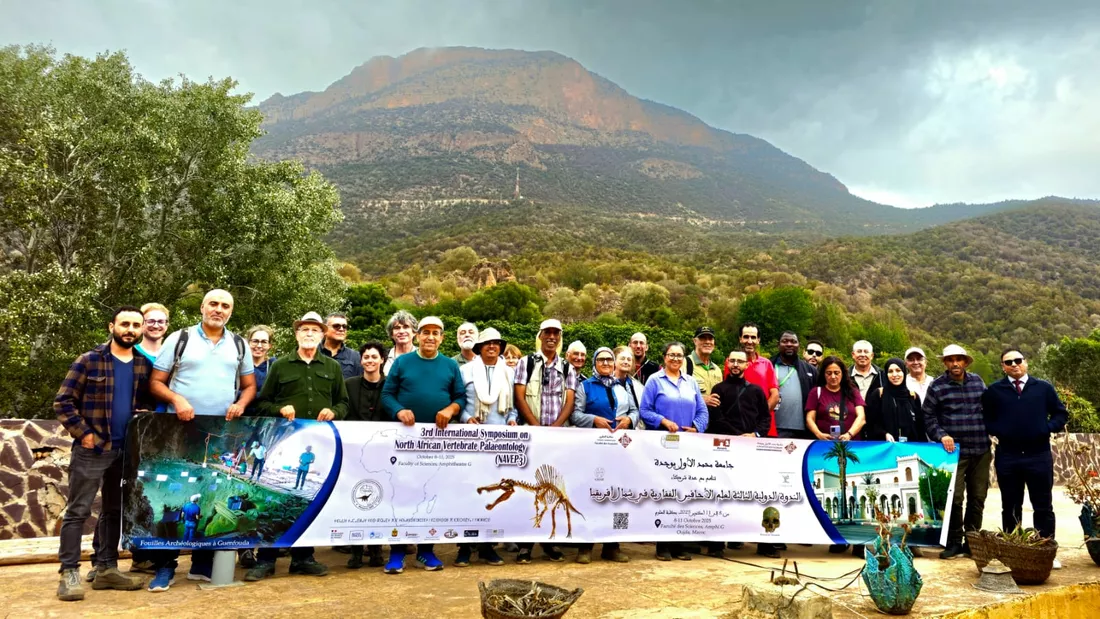
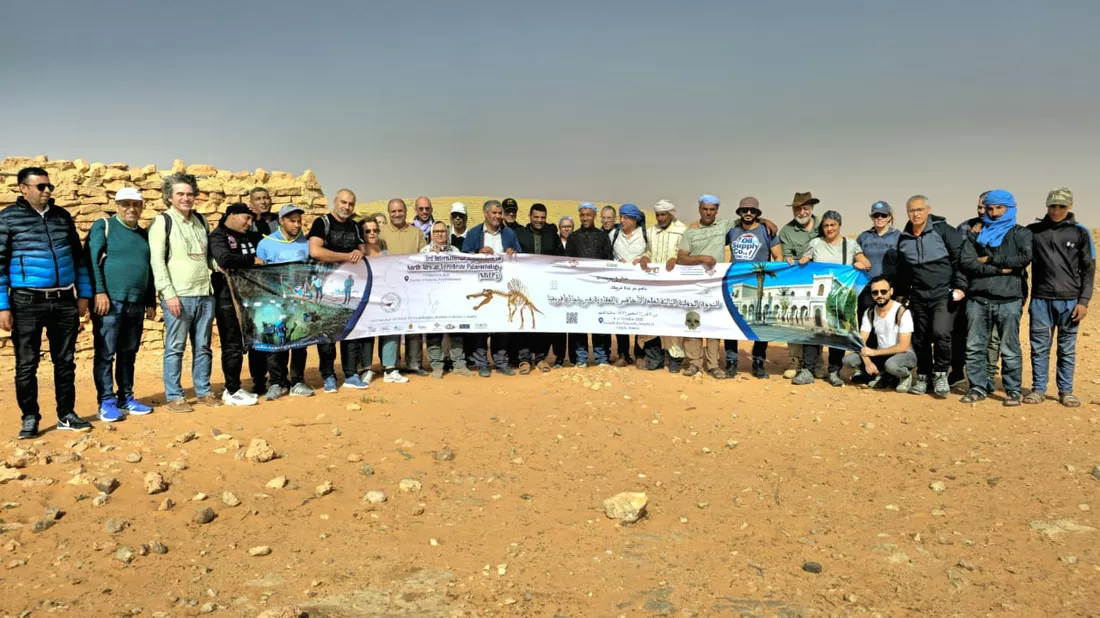
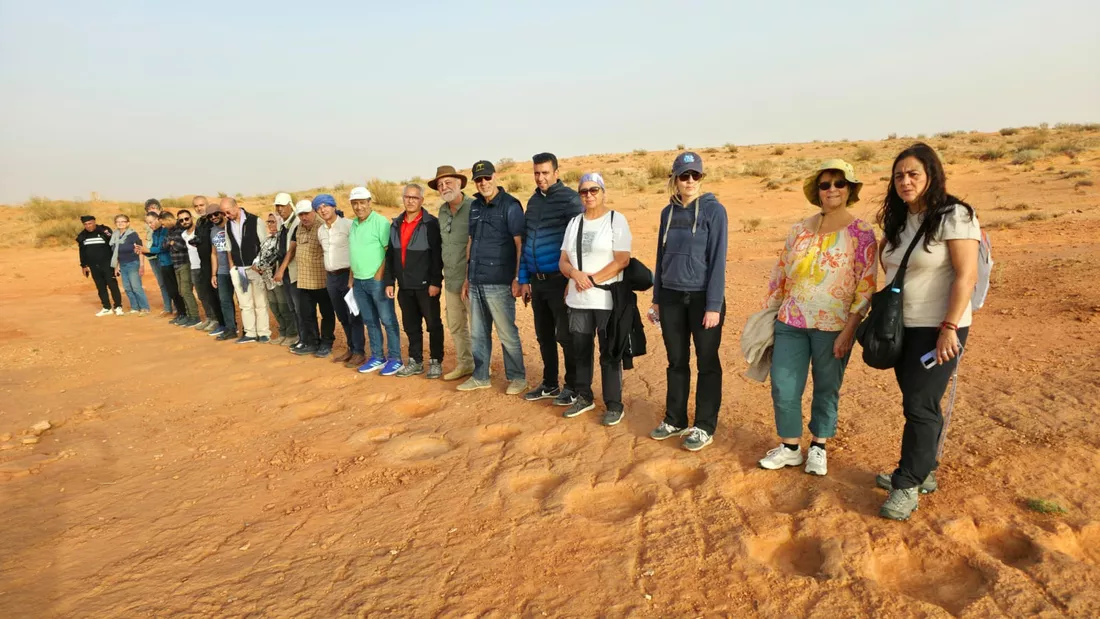
IPHES-CERCA played a significant role at the 3rd International Symposium on North African Vertebrate Paleontology (NAVEP3), held from 8 to 11 October in Oujda (Morocco). The conference, organised by the Université Mohammed Premier, brought together researchers from various countries to share the latest advances in the study of vertebrate palaeontology in North Africa—an essential region for understanding evolution and paleobiogeography in this part of the continent.
A conference structured around four thematic axes, with strong institutional representation from IPHES-CERCA
The NAVEP3 scientific programme was structured around four major axes, reflecting the vitality and diversity of current research in vertebrate palaeontology:
- Diversity, phylogeny and palaeobiogeography of fossil vertebrates
- Evolution, palaeoecology and functional adaptations
- Fossil sites, geochronology and innovative methodologies
- Palaeontological heritage, conservation and outreach
This multidisciplinary approach fostered new international collaborations and enabled the exchange of results ranging from the study of the earliest placental mammals in Africa to new data from Pleistocene and Holocene sites across the Maghreb.
Within this framework, IPHES-CERCA played a prominent role both scientifically and organisationally. The organising committee included Dr M. Gema Chacón (IPHES-CERCA, URV) and Mourad Farkouch (UMP doctoral student and IPHES-CERCA collaborator). The scientific committee included four members of the Institute: Dr Jordi Agustí, Dr Hugues-A. Blain, Dr Iván Ramírez-Pedraza and Dr Antonio Rodríguez-Hidalgo. This involvement strengthens the long-standing institutional ties between IPHES-CERCA and Moroccan research centres, particularly through the Aïn Beni Mathar–Guefaït project.
Scientific contributions of IPHES-CERCA at NAVEP3
Below is the list of oral and poster presentations involving IPHES-CERCA researchers, each accompanied by a brief summary:
- Tracing Human Journeys: Mobility Patterns of the Guenfouda Population during the Holocene in Eastern Morocco
Authors: Mourad Farkouch, Hicham Mhamdi, Mohamed Souhir, Hassan Aouraghe
Summary: The study analyses Holocene mobility patterns in Guenfouda through least-cost path modelling and geoarchaeological data. Lithic industries reveal a combination of local resource use and long-distance movements essential for subsistence and social interaction.
- Conservation and Restoration in the Palaeontological Pleistocene Sites of Ain Beni Mathar–Guefait (Jerada, Morocco)
Authors: Elena Moreno-Ribas, Hassan Aouraghe, M. Gema Chacón, Robert Sala
Summary: Focused on conservation interventions carried out during the 2017 field campaigns, including both in situ work and activities in a temporary field laboratory. The main goal was to guarantee the preservation and future musealisation of Pleistocene materials.
- Faunal Records in Human Landscapes: The Aïn Beni Mathar–Guefaït Regional Perspective (Morocco)
Authors: Mourad Farkouch et al.
Summary: Combines predictive modelling with zooarchaeology to understand the role of archaeological sites as faunal repositories. Provides new insights into human activities, mobility and ecological dynamics in the region.
- Holocene Small Vertebrates from Guenfouda Cave (Eastern Morocco): Taphonomy, Palaeoecology and the First Fossil Record of Gerbillus henleyi in North Africa
Authors: Hicham Mhamdi, Mourad Farkouch, Hassan Aouraghe, Mohamed Souhir
Summary: Reports the first fossil record of Gerbillus henleyi in North Africa and reconstructs a Holocene landscape characterised by steppe and semi-arid environments with limited post-depositional alteration.
- Paleoecological Reconstruction of First Human Dispersals in Northwestern Africa during the Plio-Pleistocene Based on Stable Isotope Analysis (Guefaït-4.2)
Authors: I. Ramírez-Pedraza, F. Rivals et al.
Summary: Stable isotope analysis of dental enamel reveals a mosaic landscape with high plant diversity and drier conditions than those of modern African savannahs.
- Paleoecological Reconstructions Using Dental Wear and Stable Isotopes of Mammal Teeth: Case Studies from Northern Africa
Authors: I. Ramírez-Pedraza, F. Rivals
Summary: A methodological synthesis combining dental wear and stable isotope data to reconstruct palaeoenvironments associated with the earliest human occupations in North Africa.
- Amphibians and Squamate Reptiles from the Late Miocene of Eastern Morocco (Guefaït-1)
Authors: H.-A. Blain, J. Agustí et al.
Summary: Presents a new herpetological assemblage from the Late Miocene, essential for biostratigraphic dating and correlation.
- Golunda aouraghei (Muridae, Rodentia): The Youngest Golunda Species Recorded in Africa
Authors: P. Piñero, J. Agustí et al.
Summary: Investigates the youngest African species of the genus Golunda, with significant evolutionary and biogeographical implications.
20 years of shared archaeology in North Africa
Since 2006, the Aïn Beni Mathar–Guefaït Basin has been the focus of a research project co-directed by Dr Robert Sala and Dr M. Gema Chacón (IPHES-CERCA), Dr Hassan Aouraghe (Université Mohammed Premier d’Oujda), and—since 2025—Prof. Saïd Bengamra (of the same university). The project aims to investigate the origins of human settlement in North Africa, one of the key regions for understanding the evolution of the earliest human communities.
This work is possible thanks to extensive institutional collaboration between IPHES-CERCA, the Faculté de Sciences (Université Mohammed Premier), the Institut National des Sciences de l’Archéologie et du Patrimoine (INSAP), the government of Jerada, the local authorities of Aïn Beni Mathar and Guefaït, and the Ministère de la Jeunesse, de la Culture et de la Communication of the Kingdom of Morocco.
The research has been funded by the Ministry of Culture and Sport (Ref.: 42-T002018N0000042853 and 170-T002019N0000038589), the Ministry of Science, Innovation and Universities (HUMANCOGNENV project – PID2024-156295NB-I00), the Faculté de Sciences (Université Mohammed Premier), INSAP, Fundación Palarq, the CERCA programme, the María de Maeztu programme (CEX2019-000945-M and CEX2024-01485-M), and the SGR grants of the Government of Catalonia (2017 SGR 836, 2017 SGR 859, 2021 SGR 01238, 2021 SGR 01237).