


A 75,000-year-old wound could be the first evidence of a Neanderthal killed by a wooden spear
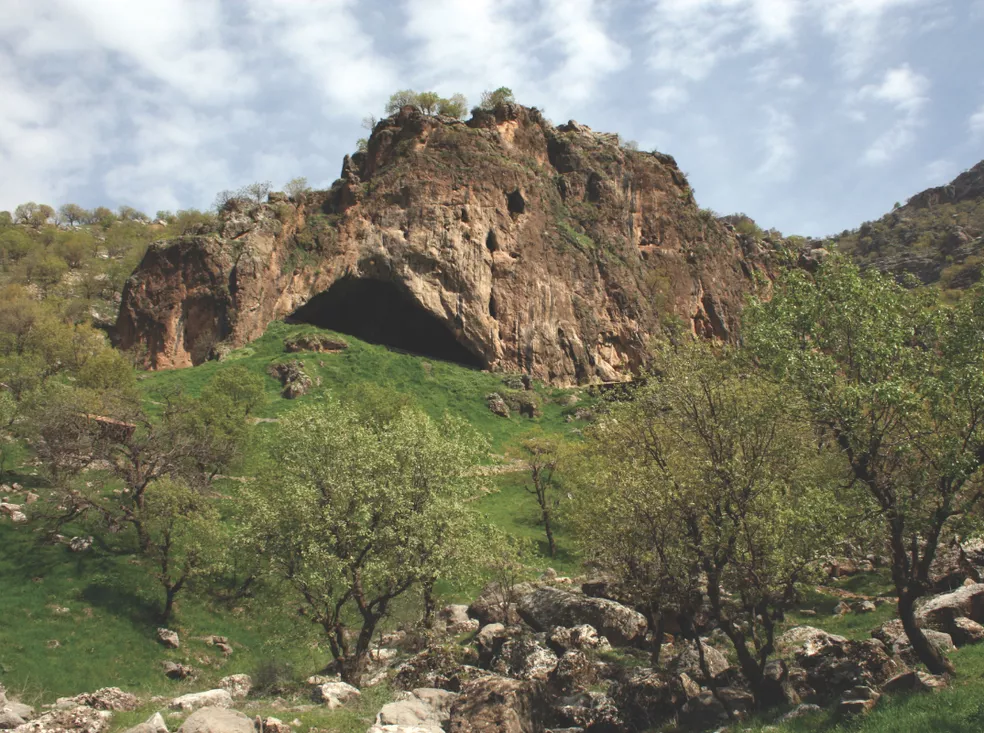
A study published in Scientific Reports examines the remains of a Neanderthal discovered at Shanidar Cave in Iraqi Kurdistan, whose shoulder blade bears a puncture wound consistent with the impact of a wooden spear
The research, led by the University of Cambridge with the participation of IPHES-CERCA, also reveals that the individual survived a severe facial injury for at least a year, suggesting that they may have received care from other members of the group
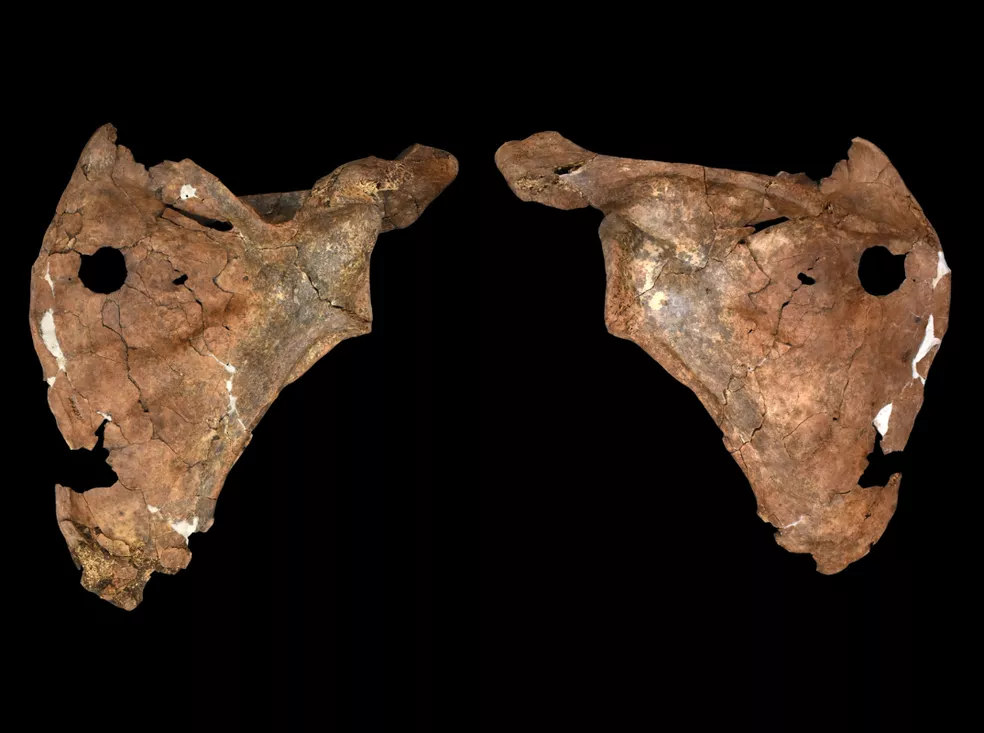
Approximately 75,000 years ago, a Neanderthal living in the mountains of what is now Iraqi Kurdistan suffered a wound that may have caused their death. Analysis of the remains, recovered from Shanidar Cave, has revealed a 15-millimetre-wide perforation in the left shoulder blade, consistent with the impact of a wooden spear. The discovery could represent one of the earliest pieces of evidence in the human fossil record of a death caused by this type of weapon.
But this individual's story does not end there. The remains also reveal that they had survived a severe facial injury for at least a year, possibly thanks to care provided by other members of the group. The study thus offers new insights into the use of wooden weapons, social relationships and funerary behaviour among Neanderthals.
The study, published in the scientific journal Scientific Reports, is led by Dr Emma Pomeroy, associate professor of the University of Cambridge, as part of the excavations at Shanidar Cave directed by Professor Graeme Barker of the same university. The co-authors include Dr Lucía López-Polín, a researcher at IPHES-CERCA, who has contributed to the conservation, restoration and reconstruction of Neanderthal remains recovered at the site through an ongoing scientific collaboration with Cambridge.
The remains belong to an individual identified as Shanidar A, an adult Neanderthal aged around 45, of whom several bones from the right hand, a number of ribs, a shoulder blade and seven teeth have been preserved. Despite their fragmentary condition, the remains have made it possible to reconstruct significant episodes in the individual's life and the circumstances that may have led to their death.
A puncture wound consistent with a wooden spear
One of the most striking findings is an almost circular perforation, approximately 15 millimetres in diameter, in the left shoulder blade. Exceptionally well preserved despite its fragility, the bone shows several radial fractures around the opening and small displaced bone fragments, which have allowed the researchers to examine the characteristics of the impact.
Studying these remains required painstaking conservation and reconstruction work, made particularly complex by the fragility and fragmentation of the bones. Dr Lucía López-Polín, an IPHES-CERCA researcher and co-author of the study, contributed to this work as part of her collaboration with the University of Cambridge.
“Discoveries like this are underpinned by extremely meticulous restoration work. We are dealing with 75,000-year-old remains that are extraordinarily fragile and must be conserved, studied and reconstructed with great precision. Every fragment can provide important information, and sometimes a seemingly minor detail can be crucial to understanding what happened to an individual,” explains López-Polín.
The analyses indicate that the injury occurred around the time of death and that its shape is consistent with the impact of a sharpened wooden spear. According to the research team, the weapon would have entered through the front of the chest, passing through the thoracic cavity before piercing the left shoulder blade. This trajectory could have damaged the lung and major blood vessels, causing a rapid death.
“It is extraordinary to have recovered such a well-preserved shoulder blade from 75,000 years ago. These bones are so thin that they are often not even preserved intact in modern burials,” explains Emma Pomeroy, lead author of the study.
The shape of the perforation closely resembles marks produced experimentally using replicas of prehistoric wooden spears, a similarity that strengthens this interpretation.
Nevertheless, the circumstances of the injury cannot be determined with certainty. It could have resulted from a hunting accident, but its position and the force required to penetrate the body are also consistent with an episode of interpersonal violence. The research cannot establish whether modern humans might have been involved.
Professor Graeme Barker, director of the Shanidar excavations, notes that evidence of systematic violence is exceptionally scarce in the earliest periods of prehistory and that most known examples date to much later farming societies.
A severe facial injury survived for at least a year
Beyond the possible cause of death, Shanidar A's remains have also revealed a much earlier traumatic episode. The individual had suffered a severe facial injury and managed to survive for an extended period.
One of the lower incisors had a longitudinal fracture that had resulted in the loss of approximately half the tooth, while other teeth showed displacement and very pronounced wear. The accumulation of dental calculus on the exposed surfaces of the fractured tooth indicates that the individual continued to live after the trauma for a period that may have been at least a year.
The severity of the injury would have made everyday activities such as eating and communicating considerably more difficult, suggesting that the individual may have needed help from other group members to survive.
“Surviving a blow powerful enough to fracture a tooth in this way, and continuing to live and eat for at least a year, or perhaps longer, would have required care and support from other Neanderthals,” explains Pomeroy.
The researcher suggests that Shanidar A may have been given soft foods or food specially prepared to make eating easier. Indeed, previous research at the same cave has documented plant-food preparation practices that may have helped provide such care.
This evidence adds to other cases documented at Shanidar, including a Neanderthal who survived for years with a paralysed arm, arthritis, deafness and partial blindness. Taken together, these findings strengthen the hypothesis that caring for more vulnerable members was part of Neanderthal social relationships.
“Shanidar A's remains reflect two aspects of many behaviours we recognise as human. On the one hand, we have evidence of a terribly violent end. On the other, this was clearly an individual who had received care during their lifetime,” Pomeroy emphasises.
Wood: a fundamental but almost invisible technology
The possible identification of a wound caused by a wooden spear also sheds light on Neanderthal technology. Unlike stone tools, objects made from organic materials are rarely preserved in the archaeological record, making it difficult to assess how extensively they were used.
Several European discoveries, such as the approximately 200,000-year-old Schöningen spears in Germany and the more than 400,000-year-old wooden point recovered at Clacton-on-Sea in the United Kingdom, show that the manufacture of wooden weapons dates back hundreds of thousands of years.
In this context, a recent study led by IPHES-CERCA and published in Science Advances documented 597 wooden remains and impressions at the Abric Romaní site (Capellades, Barcelona), associated with Neanderthal occupations dating from 62,000 to 40,000 years ago. The evidence includes tools, weapons and elements related to the construction and organisation of domestic spaces, highlighting the importance of wood in Neanderthal daily life.
Shanidar A's possible spear wound thus offers a complementary perspective on the use of this material, making it possible to study its effects on the human body even in the absence of the weapon that may have caused the injury.
Shanidar: a key site for understanding Neanderthal funerary behaviour
Shanidar Cave is one of the most emblematic sites for the study of Neanderthals. Excavations directed by Ralph Solecki in the 1950s and 1960s recovered the remains of several individuals and sparked intense debate about the existence of intentional funerary practices.
New excavations, begun in 2015 under the direction of the University of Cambridge, have identified additional individuals and documented the deposition of at least five Neanderthals (four adults and one child) within a very small area. The remains, separated by thin layers of sediment, suggest that the bodies were deposited at different times and that Neanderthals may have repeatedly returned to the same place to lay their dead to rest.
“The best explanation is that this represents intentional and symbolic funerary behaviour. These Neanderthals returned to the same place to deposit their dead,” explains Pomeroy.
The case of Shanidar A brings together, in a single individual, evidence of a possible violent death, survival after a serious injury, and the deposition of the body in a space repeatedly used for funerary purposes. Together, these findings offer new insights into the lives, deaths and social relationships of Neanderthal populations.
Bibliographic reference
Pomeroy, E., Hunt, C. O., López-Polín, L., Sala, N., Pantoja Pérez, A., Holman, J., Twyman, J., Bennett, P., Reynolds, T., Lane, R., Pirrie, D., & Barker, G. (2026). Evidence for funerary behaviour and lethal trauma in a new Neanderthal individual from Shanidar Cave. Scientific Reports, 16, 30042. DOI: 10.1038/s41598-026-69193-z


