

Atapuerca reveals a much more complete Homo antecessor population and confirms that cannibalism also affected adults
The 2026 excavation season has recovered 24 new human fossils attributed to Homo antecessor from the Aurora layer at Gran Dolina. The discoveries increase the minimum number of identified individuals to between 13 and 15, including up to six adults
The new evidence provides a much more representative picture of the population and offers new insights into the biology and behaviour of the first Europeans 850,000 years ago
Thirty years after the discovery of Homo antecessor revolutionised our understanding of the first human populations in Europe, the Aurora layer (TD6.2) at Gran Dolina continues to yield discoveries that are reshaping our knowledge of this species. The 2026 excavation season has recovered at least 24 new human fossils attributed to Homo antecessor, an exceptional assemblage that not only enlarges the most important Lower Pleistocene human fossil collection in Europe, but also provides a much more representative picture of this ancient population than was previously available.
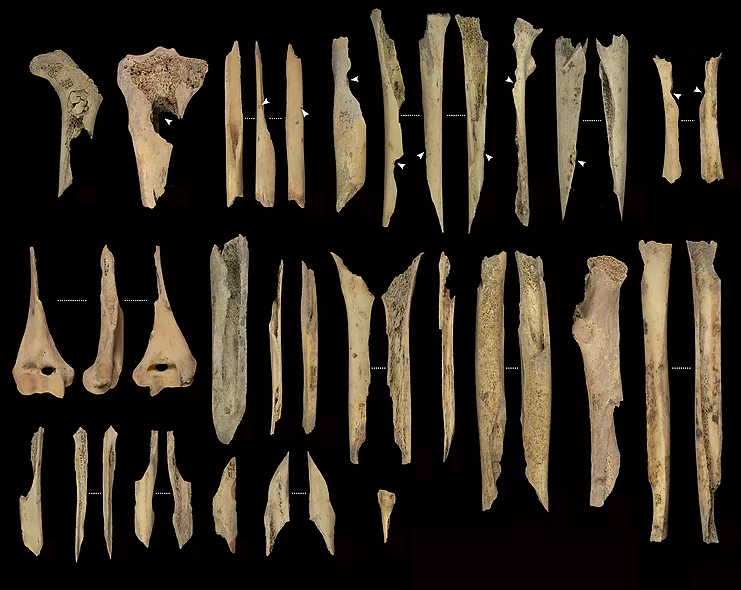
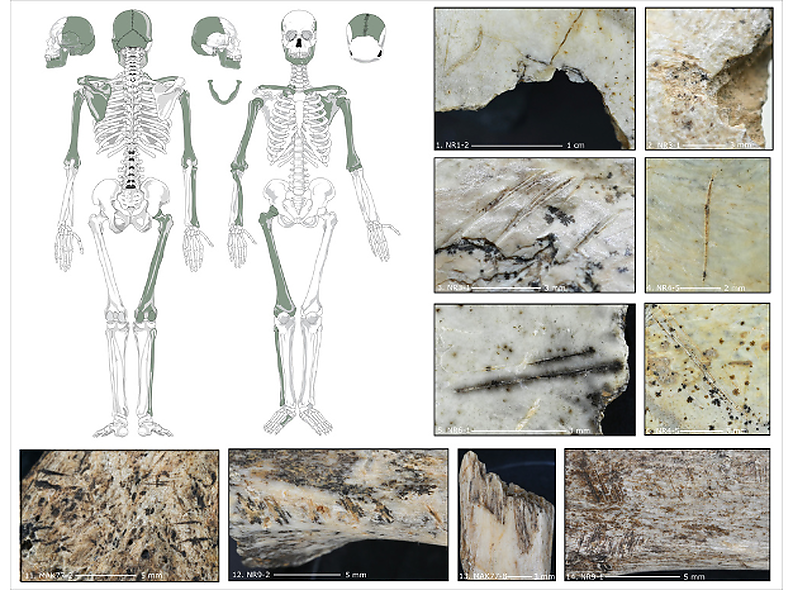
Among the new discoveries, the significant increase in adult individuals is particularly noteworthy. Many of these remains preserve cut marks produced during the processing of the bodies. This new evidence confirms that the cannibalistic practices documented at Gran Dolina also affected adults, expanding our understanding of the behaviour of one of the most important human species for explaining the earliest settlement of Europe.
The new finds raise the minimum number of identified individuals from level TD6.2 to between 13 and 15 and, above all, confirm the presence of at least six adults, an age group that had previously been clearly underrepresented. This change makes it possible to reconstruct a much more complete population and opens up new opportunities to investigate the biology, development, social relationships and behaviour of Homo antecessor around 850,000 years ago.
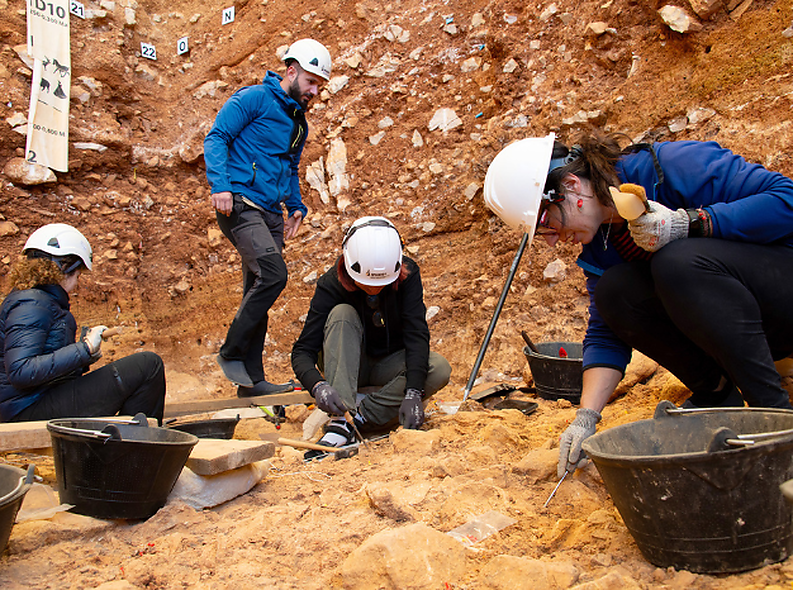
The 2026 season also marked the resumption of excavations in the Aurora layer, the same level where the first remains attributed to Homo antecessor were discovered in the mid-1990s. Although work this year focused on only a small part of the upper section of the layer, the first days of excavation already revealed the extraordinary scientific potential of the deposit, with the recovery of four human fossils in a very short time, an expectation that was confirmed throughout the remainder of the excavation season.
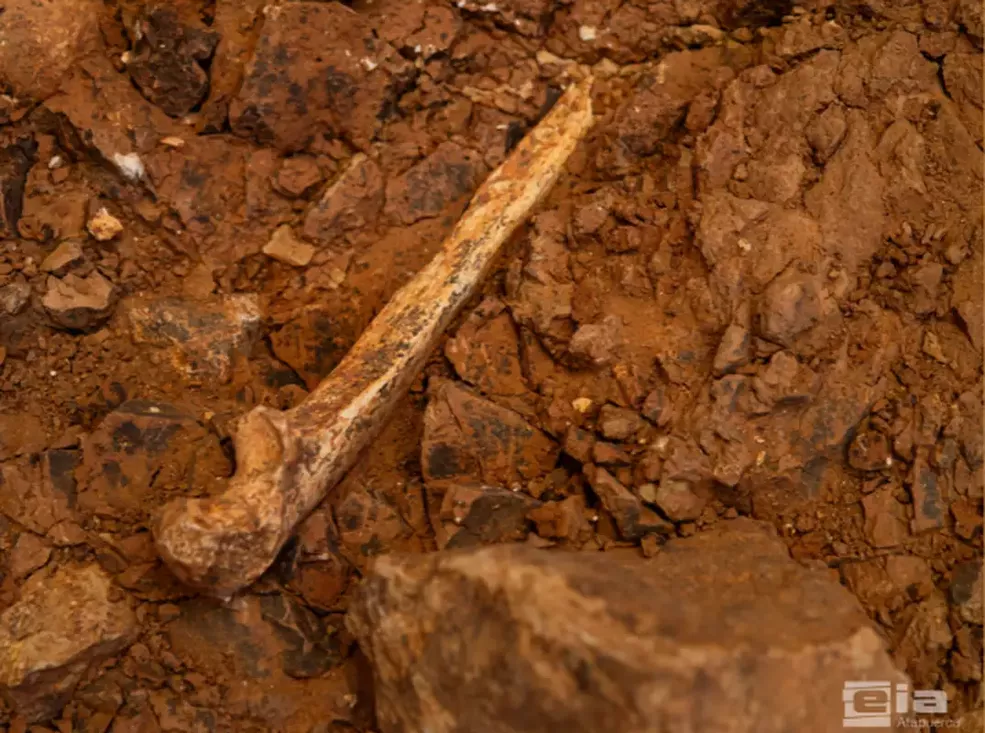
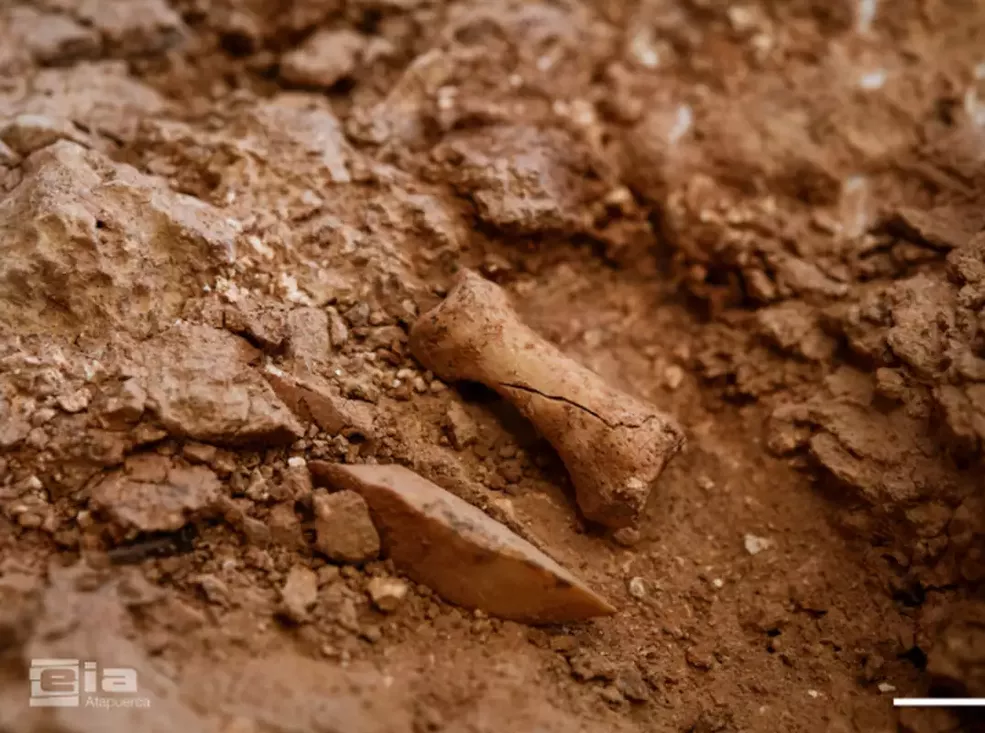
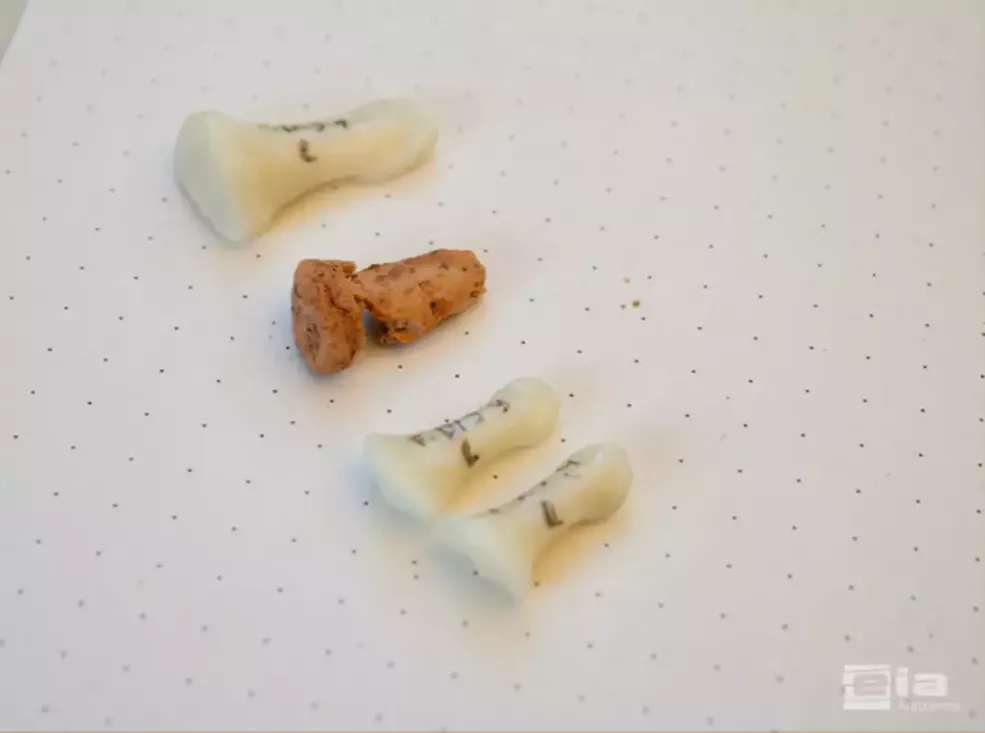
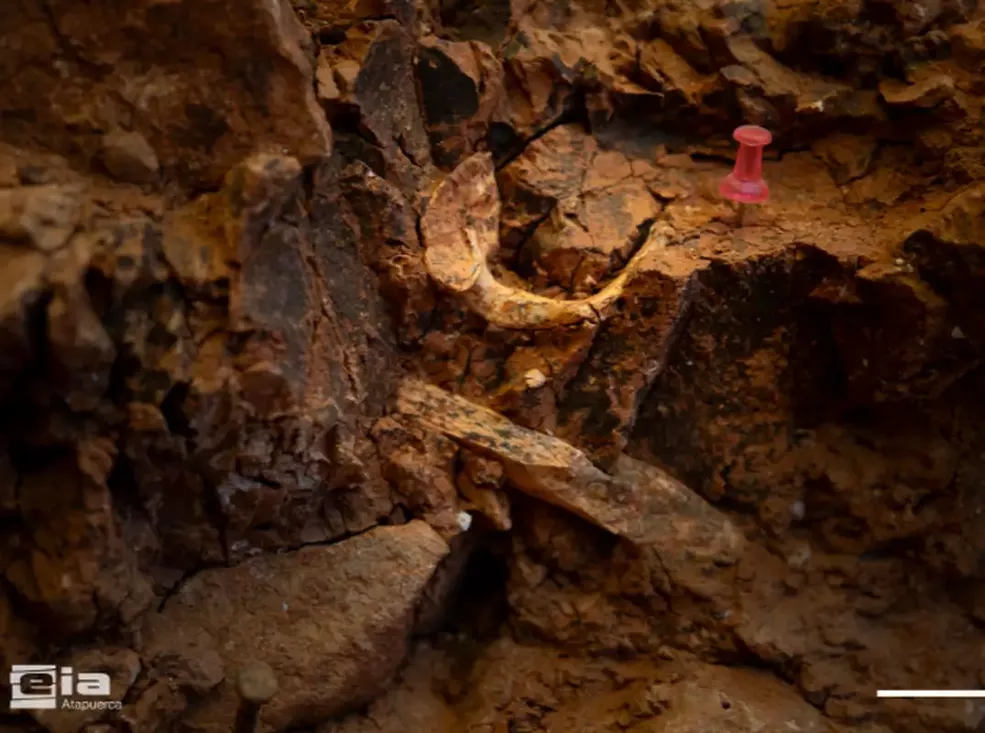
Among the recovered remains are a fragment of the temporal bone, several cervical and lumbar vertebrae, hand and foot phalanges, three teeth and several long bones, including the first ulna ever recovered from the site, as well as fragments of tibia, femur and humerus. Although most of the fossils are highly fragmentary, each one contributes to completing the anatomical picture of a species that remains one of the least well understood of the European Lower Pleistocene.
According to Andreu Ollé, co-director of the Atapuerca Project and researcher at IPHES-CERCA, “Each excavation season helps us complete a puzzle that still has many missing pieces. The increase in the number of individuals, and especially the addition of more adults, allows us to begin understanding this population from a much more complete perspective than ever before. For the first time, we can approach its demographic structure with a level of representativeness that we simply did not have until now.”
Cannibalism also affected adults
One of the most significant outcomes of this excavation season is the substantial increase in the number of adult individuals documented. Whereas the Homo antecessor assemblage had previously consisted predominantly of infant and juvenile remains, the new discoveries make it possible to reconstruct a population that is far more balanced and demographically representative.
Many of the newly recovered remains bear cut marks produced during the processing of the bodies, providing further evidence of the cannibalistic practices documented at Gran Dolina for almost three decades. These marks have been identified on both juvenile and adult individuals, confirming that this behaviour was not limited to younger members of the population and broadening our understanding of this practice among Homo antecessor groups.
For Palmira Saladié, researcher at IPHES-CERCA and coordinator of the work at TD6, this represents a major turning point in the study of the site. “Until now, we had mainly infant and juvenile remains, which conditioned our interpretation of the assemblage. The discovery of more adult individuals, some of whom also bear cut marks, demonstrates that cannibalism was not restricted to younger individuals. More importantly, however, it provides us with a much more representative population for understanding the biology, demography and behaviour of Homo antecessor”.
The taphonomic and paleoanthropological studies that are now underway will allow these new remains to be analysed in detail and will shed light on questions that have so far been difficult to address, such as possible age-related differences in the treatment of individuals, the dynamics of cannibalistic episodes, and the social organisation of the human groups that occupied Gran Dolina around 850,000 years ago.
Reconstructing a human occupation site from 850,000 years ago
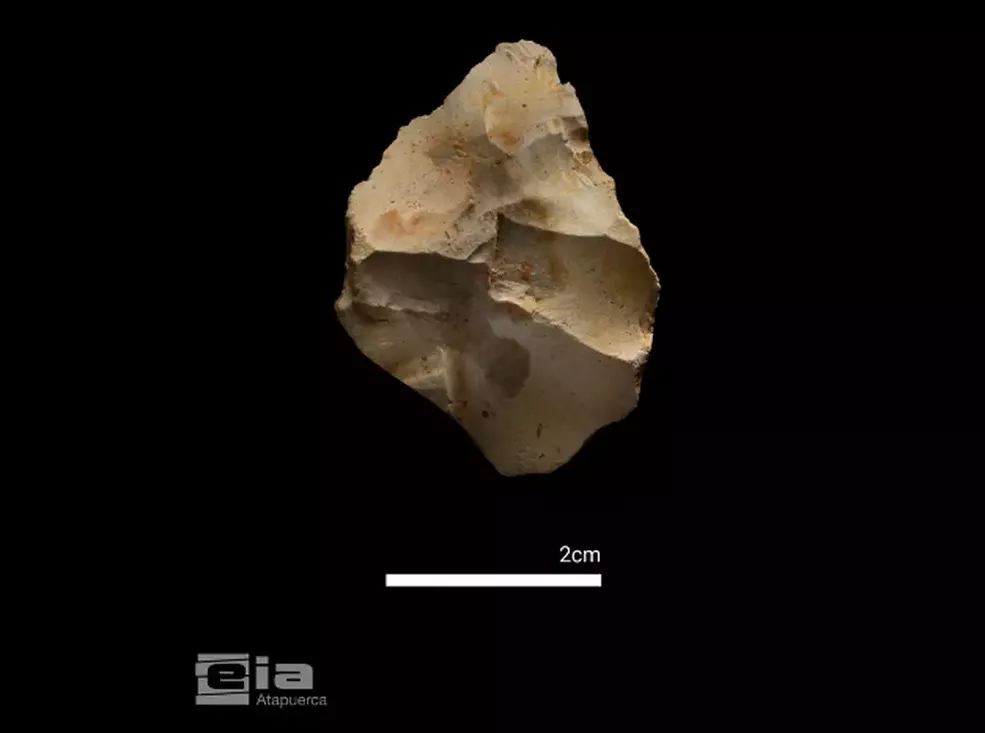
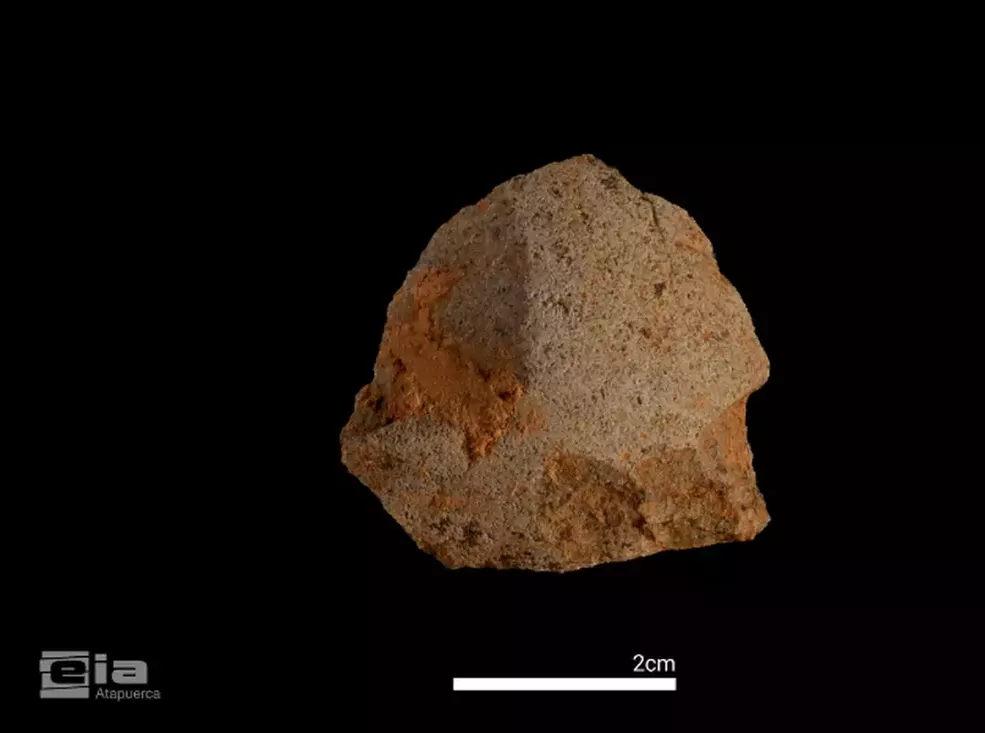
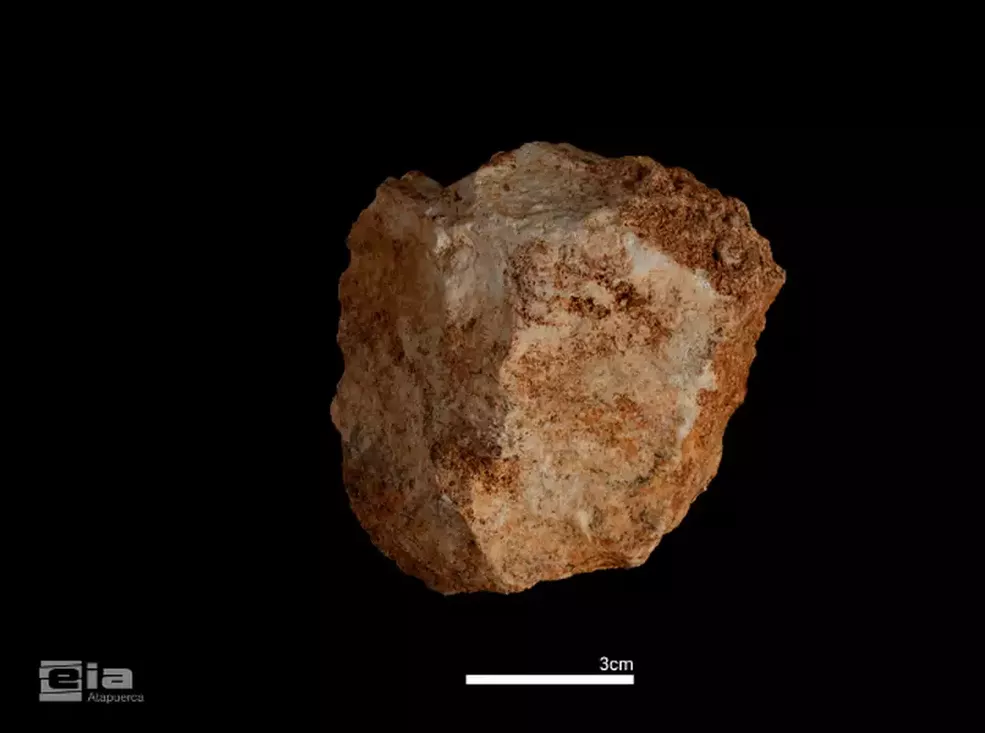
Alongside the human remains, the 2026 excavation season recovered a rich assemblage of stone tools made from flint, quartzite, sandstone and quartz, together with numerous faunal remains belonging to hyenas, beavers, deer, bovids, horses and rhinoceroses.
Taken together, these discoveries make it possible to reconstruct in exceptional detail the activities carried out by the human groups that occupied this site and the environment in which they lived. The combination of stone tools, animal remains and human fossils makes the Aurora layer one of the finest archaeological records in Europe for understanding the lifeways of the continent’s earliest human populations.
According to Andreu Ollé, “The significance of Gran Dolina extends far beyond its human fossils. The relationship between the stone tools, faunal remains and the bones of Homo antecessor allows us to reconstruct a human occupation site from 850,000 years ago with extraordinary detail. Each new excavation season brings us a little closer to understanding how these human groups lived, exploited available resources and organised their social lives.”
A site that continues to transform our understanding of the first Europeans
According to Marina Mosquera, Director of IPHES-CERCA and co-director of the Atapuerca Project, the results of this excavation season demonstrate that the Aurora layer remains one of the world’s leading archaeological sites for the study of human evolution. “Thirty years ago, the first Homo antecessor remains changed the way we understood the earliest human populations in Europe. Today, the Aurora layer continues to produce discoveries of international significance that expand this knowledge and allow us to reconstruct this population with a level of detail that would have been unimaginable only a few years ago. We have only just begun excavating this new area, and the first results already demonstrate its enormous scientific potential.”
The discoveries made during the 2026 excavation season represent only the beginning of a new phase of research at Gran Dolina. The opening of this new excavation area has already significantly increased both the number of human fossils recovered and the representativeness of the Homo antecessor population, opening up new opportunities to investigate the biology, anatomical variability and behaviour of the first human populations to inhabit the European continent.
Future excavation seasons will be crucial for continuing to expand this exceptional fossil collection and for deepening our understanding of key aspects such as the demographic structure of the population, subsistence strategies, social relationships and the role that cannibalism may have played among these human groups approximately 850,000 years ago.