

HERIT-AWARE turns cultural and natural heritage protection into an educacional video game
The European Erasmus+ project, involving the Universitat Rovira i Virgili and researchers affiliated with IPHES-CERCA, has developed a serious game that challenges university students to address real-world issues related to heritage conservation and manag
How can cultural and natural heritage be protected when it is at risk? What information is needed before making a decision? Which resources should be prioritised? These are some of the questions posed by HERIT-AWARE, an educational video game developed within the framework of a European Erasmus+ project that uses game-based learning to train university students in heritage protection and management.
The project is coordinated by the Muséum national d’Histoire naturelle in Paris and involves the Universitat Rovira i Virgili (URV) through Dr Carlos Lorenzo and Dr Robert Sala, professors at the URV and researchers at IPHES-CERCA. Its aim is to develop new training and awareness-raising tools that enable an integrated approach to the cultural, natural and social dimensions of heritage.
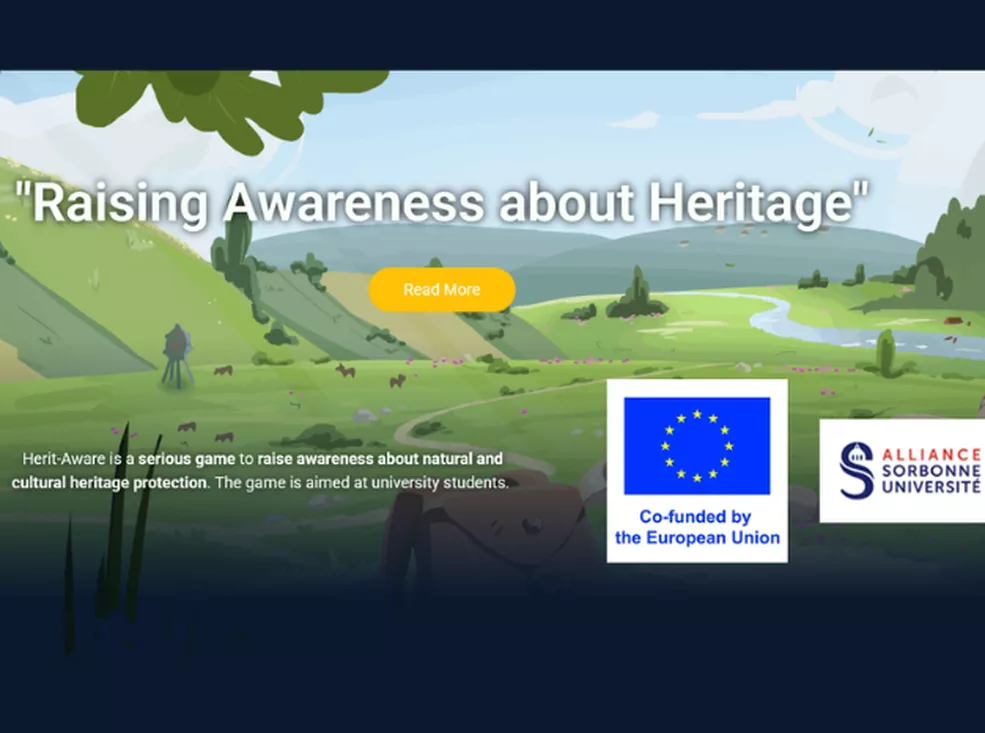
The main outcome is HERIT-AWARE, a serious game in which participants work as a team and virtually explore different territories. During the game, they must gather information, identify threats to heritage and decide which actions and resources are best suited to protecting it. The game currently features 24 challenges across six areas and combines exploration, educational content, resource management and collaborative work.
Learning to make decisions
The game is based on a narrative set in the near future, in which a series of disasters have affected cultural and natural heritage. Faced with this situation, players take on the role of agents working for an international organisation tasked with investigating the affected territories, engaging with local communities, identifying existing problems and proposing measures to prevent the loss of heritage.
In this way, HERIT-AWARE goes beyond the transmission of knowledge by placing students in decision-making situations similar to those encountered in real-world heritage management. Teamwork, communication, managing a limited budget and analysing different sources of information are all integral parts of the gaming experience.
A video game co-created by universities and students
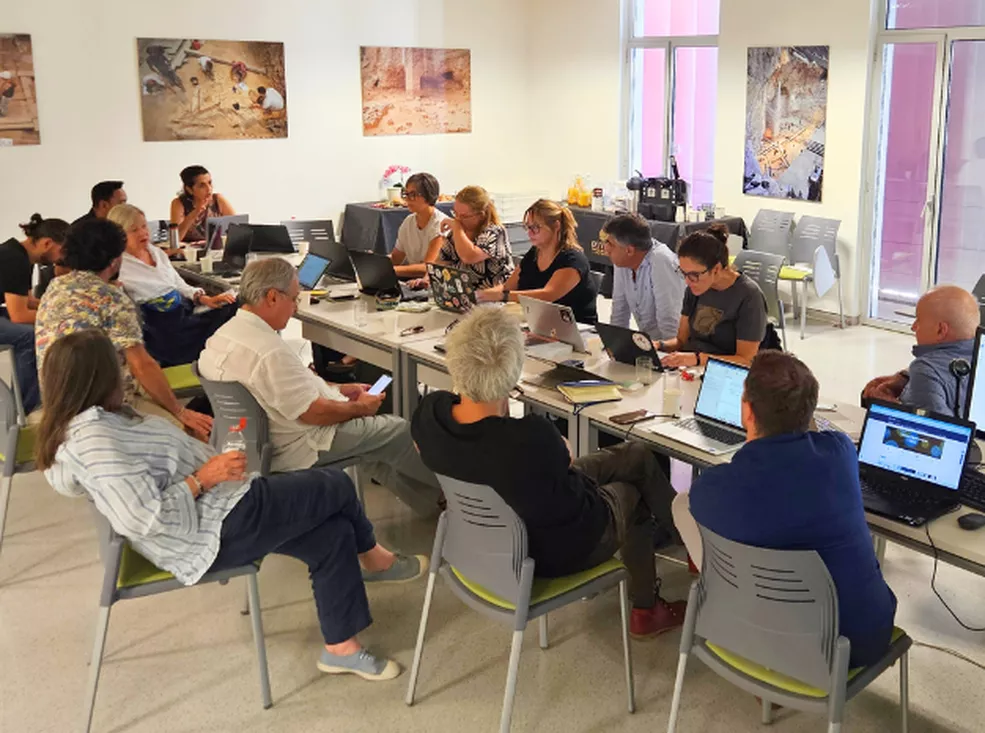
One of the central elements of the project has been the co-creation of the video game. Teaching staff, researchers, university students and video game development specialists have participated in the different stages of designing and testing the tool. International intensive schools and playtesting sessions have made it possible to progressively incorporate users’ experiences and feedback into the development of the game.
This process has taken place in different countries since the project began. The initial phases made it possible to create and test different areas of the game and incorporate the results of trials carried out with students from a variety of backgrounds and disciplines.
HERIT-AWARE is part of the Erasmus+ programme for cooperation in higher education and is coordinated by the Muséum national d’Histoire naturelle in Paris. The consortium also includes the Universitat Rovira i Virgili, the Università degli Studi di Ferrara, the Instituto Politécnico de Tomar, Eötvös Loránd University and the video game studio Holy Moka Games, with Indonesia’s Universitas Kristen Satya Wacana as an associated partner.
The project thus brings together scientific research, university education and game-based learning to prepare students to address the challenges associated with heritage preservation and sustainable management from a critical and interdisciplinary perspective.
Visit the website to access the game via this link.